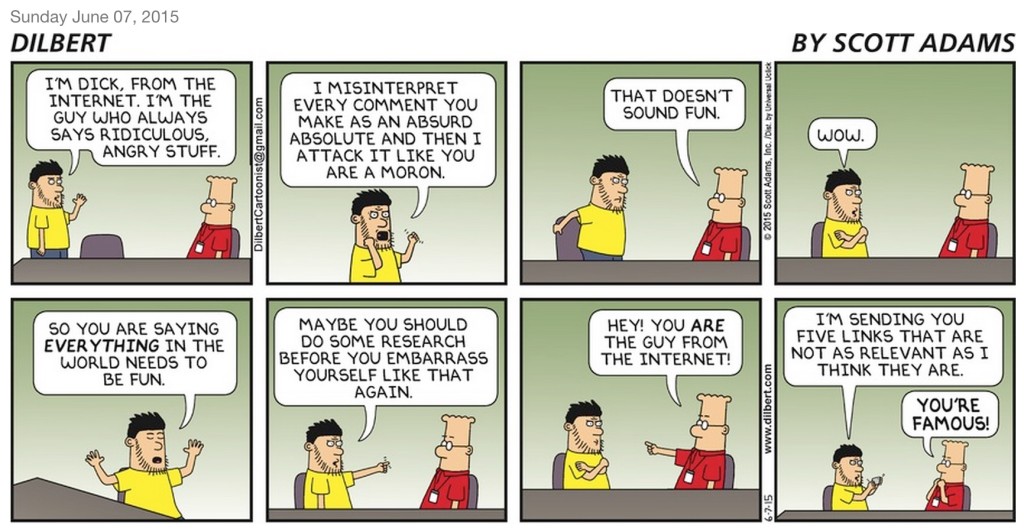
Recall? What recall?

google-search
While getting my car serviced (at the MINI dealership in St. Louis) earlier this week I mentioned the Takata airbag recall and the young man at the part window got puzzled look on his face.

“You’ve heard about the exploding airbag canisters and the big recall, right?

Nope, he insisted. He hadn’t heard about any airbag recall. About that time another young man came up to the next part window so I asked him. Same response. Had no idea what I was referring to.

I’m certain they weren’t fucking with me. Somehow they had missed seeing/hearing/reading _anything_ about this long-running story. I find that amazing.

Unless I’m missing something here, this means these two men could not have watched a network or cable newscast, read a newspaper, or spent 2 minutes on an online news site for the past 6 months (longer?).

How is that possible? And what else is going on in the world about which these young men are oblivious? I assume they’re on Facebook and would have seem some reference to this story there. No?

Scott Adams: Management

“One of the interesting aspects of better global communications, better access to information, and better mobility is that collectively it reduces the risk of making hiring mistakes. When employers were limited to hiring people who lived nearby, and the only information at their disposal was lie-filled resumes, every growing company would necessarily absorb a lot of losers. But now that entrepreneurs can hire the best people from anywhere in the world, we have for the first time in human history the ability to create teams so capable they require no management structure. That’s new.”

“Management only exists to compensate for its own poor hiring decisions. The Internet makes it easier to locate and then work with capable partners. Therefore, the need for management will shrink – at least for some types of businesses – because entrepreneurs have the tools to make fewer hiring mistakes in the first place. Management won’t entirely go away, but as technology makes it easier to form competent teams without at least one disruptive or worthless worker in the group, the need for management will continue to decline.”

Virtual kidnappings; black-market online identities

From remarks by Eric Schmidt to audience at Cambridge University:

“We could see virtual kidnappings – ransoming your ID for real money,” Schmidt said. “Rather than keeping captives in the jungle, groups like Farc [in Colombia] may prefer a virtual hostage. That’s how important our online ID is.”

“But the future will be much more disruptive to terrorists than everyone else. I can’t see them operating out of caves in Tora Bora” – as al-Qaida did after the US invasion of Afghanistan in 2001. […] Osama bin Laden’s compound in Abbottabad reportedly raised suspicions because it didn’t have any internet connection.”

“Our online identity will become such a powerful element. Laws to protect anonymity – we may even see rise in black market where we can buy pre-made or real identities, with all their shopping and background all completely ‘real’ – verifiable online, that is. […] Both drug smugglers trying to evade police and political activists looking to hide from repressive regimes would find those useful, he said: “you’ll be able to buy an identity with fake friends and a history of purchases.”


Larry Page Interview

“If you’re not doing some things that are crazy, then you’re doing the wrong things.”

“Companies fail because they do the wrong things or they aren’t ambitious, not because of litigation or competition.”

“Governments are now afraid of the Internet because of the Middle East stuff, and so they’re a little more willing to listen to what I see as a lot of commercial interests that just want to make money by restricting people’s freedoms.”

Larry Page

Chris Anderson’s email charter

Chris Anderson laments we can “spend most of our working week simply handling the contents of our in-boxes. And in doing so, we’re making the problem worse. Every reply, every cc, creates new work for our friends and colleagues. The total time taken to respond to an email is often MORE than the time it took to create it.” Mr. Anderson’s ideas for “fixing” email aren’t new but well worth sharing here:

Respect Recipients’ Time. This is the fundamental rule. As the message sender, the onus is on YOU to minimize the time your email gobbles at the other end — even if it means taking more time at your end before sending.

Be Easy to Process. This means: crisp sentences, unambiguous questions, keep it short. If the email absolutely has to be longer than 100 words, make sure the first sentence is clear about the basic reason for writing.

Chose Clear Subject Lines.

Here are some that don’t work:

Subject: Re: re: re: re
Subject:
Subject: Hello from me!
Subject: next week….
Subject: MY AMAZING NEW SHOW starts next week at the Vctory Theater at 113-86 Broad Lane, every night 8 PM 6/7–7/12

Here are some that do:

Subject: TED Partnership Proposal
Subject: Rescheduling today’s dinner with Sarah G.
Subject: Noon meeting cancelled (eom). EOM means ‘end of message.’ It’s a fine gift to your recipient. They don’t have to spend the time actually opening the message.

Short Does Not Mean Rude! Let’s mutually agree that it’s OK for emails — and replies — to be really short. They don’t have to include the usual social niceties, though the occasional emoticon is no bad thing ;-) . No one wants to come over as brusque, so don’t take it that way. We just want our lives back!

Slow Does Not Mean Uncaring! Let’s also agree that it’s OK if someone doesn’t respond quickly, or ever. I’s not that they don’t love you. They may just not want to be owned by their in-box. Avoid sending chasing emails, unless you’re desperate. It’s only exacerbating the problem.

Abhor Open-Ended Questions. It’s really mean to send someone an email with four long paragraphs of turgid text followed by “Thoughts?”. It’s generous to figure out how you can offer people simple yes/no questions – or multiple choice! “When you have a moment could you let me know if you’re A) firmly in favor, B) mildly in favor C) against or D) no opinion. Thanks!”

Cut Gratuitous Responses. You don’t need to reply to every email. If I say “Thanks for your note. I’m in.” You don’t have to reply “Great.” That just cost me another 30 seconds. If you must confirm, put it in the subject line with an ‘eom’.

Think Before you cc: cc:’s are like mating bunnies. Like Tribbles from Star Trek. Like spilling a tub of olive oil-coated spaghetti on a well-waxed floor. Like too many metaphors. Most of them are unnecessary, and they are hard to get rid of. The rule should be: for every additional cc, you must increase the time you spend making sure your outgoing email is crisp and that it’s clear who needs to respond, if anyone. And if you reply to an email, take care to ask whether you really need to include everyone cc’ed on the original email.

Speak Softly. DO NOT USE ALL CAPS IN THE BODY OF YOUR EMAIL. It’s rather like screaming at someone. And they’re hard to read – as are most unusual fonts and colors. Simple sans serif fonts like Arial, Helvetica, Verdana work best. If you want to add some zing to your emails, design a personalized signature tag.

Attack Attachments. Don’t use them unless they’re critical. Some people have all kinds of graphics files as logos or signatures that appear as attachments at the receiver. Not cool. Time is wasted trying to see if there’s something to open. Even worse is sending text as an attachment when it could just as easily have been included in the body of the email and saved that extra click-and-wait.

If you send an invite to an event, it’s fine to include an attachment that announces it visually. But:

-If there is a URL, include it in text form so it shows up as a clickable link. Or make the whole image itself a clickable link. Not fair to expect someone to retype a url !
-Please include the location, date and time in text format so that the information can be quickly copied and pasted. That way it can quickly be added to a calendar. (And error free. You don’t want “The Knickerbocker Club, 7:30 PM, black-tie required” to morph into “The Kickboxer Club, 7:30 AM, black-belt required”.)

    Make it easy to unsubscribe. If you send out email newsletters, please make it easy to stop the flow. Letters that prompt rage are not helping your brand!

    Think about the thread. Some e-mails depend for their meaning on context. Which means it’s usually right to include the thread which they’re responding to. But it’s rare that a thread should extend to more than 3 emails. Before sending, cut the crap!

    Don’t reply when angry. Just walk away from the computer. Stamp your feet. Scream out the window. Do not send an email until your emotions have calmed. One rude, jerky email can tar you for life… and spark an even worse response.

    Use NNTR. “No need to respond.” Use it in a subject line, right before EOM. Or use it at the end of an email. What a gift to your recipient!

    Pay a voluntary email tax. The reason email is escalating is because it’s free. No one wants to change that… but what if at the end of each month, you quickly totted up how many emails you had sent, multiply by the average number of cc’s, and pay that number of cents into a personal book-buying account. You’ll end up with a lot of great books… and it might just pull you away from the goddam computer for a bit! Speaking of which…

    Switch off the computer! This could be the most important rule of all. If we all agreed to spend less time doing email, we’d all get less email! Consider… calendaring half-days at work where you refuse to look at email. Consider… email-free weekends. Consider… setting up the following auto-response. “Thank you for your note. As a personal commitment to my and my family’s mental health, I now do email only on Wednesdays. I’ll reply to as many as I can next Wednesday. Thanks for writing. Don’t forget to smell the roses.”

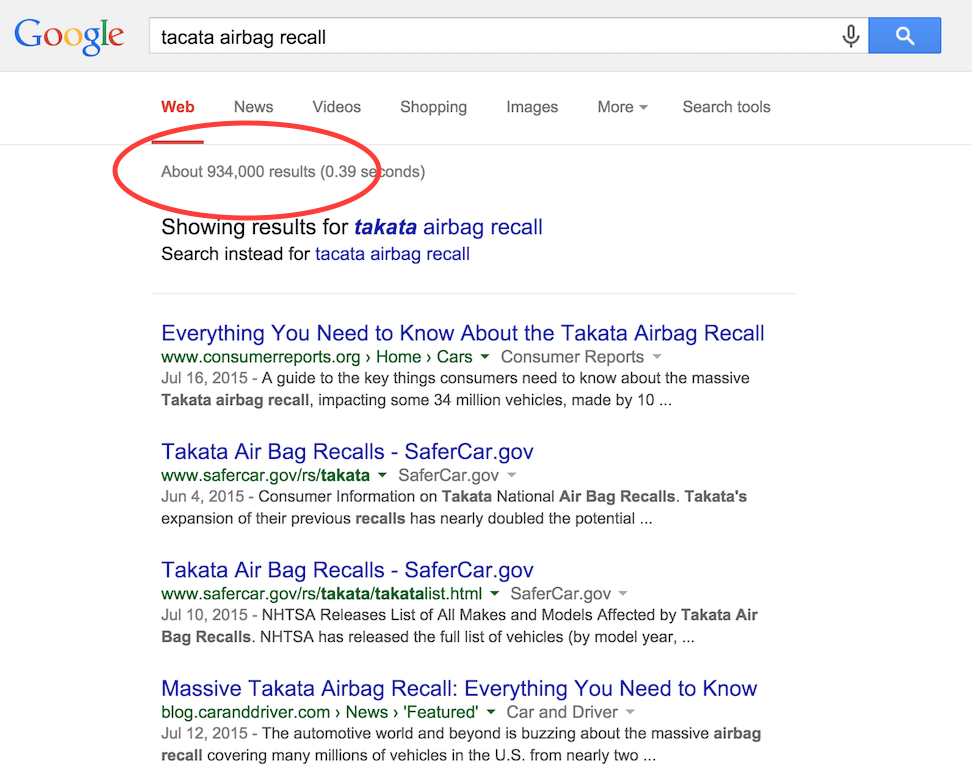
    If you want my attention, you must earn it

    My pal Todd sent me an email yesterday with a link to a YouTube video. I asked why he didn’t just direct message me on Twitter or Google Chat.

    “Email is easier for me,” was his reply. He was sharing something he thought was interesting so he gets to decide what works best for him. Right?

    A lot of people screen their in-coming phone calls. This infuriates some callers who feel you have an obligation to take their call.

    All of this got me thinking about who controls communications of this sort. The “sender” or the “receiver.”

    Every evening our USPS mail box is filled with junk mail that we routinley throw in the dust bin (for my UK pals). I asked the mailman about this last week, if there is any easy way to stop 3rd class mail. He mumbled something about writing each of the senders. Yeah, right. In that instance, the direct mail people control the communication up to the point I shit-can the stuff.

    I was intrigued by the decision of UNC professor Paul Jones to abandon email altogether:

    “I spent 30 years investing in email,” Jones said. “The undergrads I teach use everything but email. Journalists use Twitter. You can use anything else to get in touch with me — text messages, AIM, G-chat, Facebook, Facebook chat … but I was investing too much into email and getting little back.”

    I send a lot of email but don’t expect anyone to open and read what I send. It’s my responsibility to make the subject line so interesting and relavent to the recipient that she WANTS to read it.

    This seems pretty cut-and-dried to me. You might want to communicate something to me, but you need my permission. I have to open the email (or snail mail); pick up the phone; grant your friend request.

    It’s my attention. If you want some of it, you have to earn it.


    Is Gen Y changing the workplace?

    Generation Y (GenY) is made up of those born between 1981-1999. I hear a few knocks on today’s young people but mostly from older folks with a very different view of… everything. I found the following in a story on a Canadian website and have applied for membership in Gen Y.

    Clay Collins, author of The Alternative Productivity Manifesto and Quitting Things and Flakiness: The #1 Productivity Anti-Hack, argues that Gen Y is different than previous generation workers in the following ways:

    • Gen Y uses modern tools and technologies, including software that’s easily accessible and free from the Internet;
    • Gen Y easily maintains their to-do lists, and priorities by synching with the PDAs and iPODs;
    • Gen Y are not workaholics, and understand the relationship between a balanced life and productivity;
    • Gen Y are more likely to love their jobs, because they change jobs more frequently, and stay in jobs that match their passions and talents;
    • Gen Y has a continuing thirst for learning and personal growth;
    • Gen Y wants to have new experiences, try new things, and be creative;
    • Gen Y doesn’t stay in jobs they don’t like just to be comfortable and secure.

    Understanding Generation Y is important not just for employers. Older workers–that is, anyone over 30–need to know how to adapt to the values and demands of their newest colleagues. Before too long, they’ll be the bosses. via Is Gen Y changing the workplace? Entrepreneur Financial Post.

    “Why did the world shatter at the touch of a hyperlink?”

    Dr. David Weinberger asks (and answers?) the question: “Why did the world shatter at the touch of a hyperlink?”

    “Newspapers, encyclopedias, record companies, telephones, politics, education, analytics, scientifics, genetics, libraries, mass media, high culture, television, classrooms, assholism, channels, columns, stations, tours, travel, marketing, picketing, knitting, hectoring, picturing, gossiping, friendship redefined, attention redefined, leadership redefined, defamation redefined, curating, editing, publishing, correcting, crowds, mobs, shopping, bar-hopping, catalogs, sing-alongs, fact-checking, being together, being apart, staying together, moving on. Social forms and major institutions, many set in the Earth on stone foundations, fell down at the flick of a hyperlink.”

    This started me thinking about tech changes over the last ten years. Digital cameras; high speed Internet access; social media (blogs, Twitter, Facebook); iTunes; smart phones; Google; Tivo; ebooks and on and on.

    And, finally, how has our company changed during the past ten years? Can we list the Ten Biggest Changes? Five? Three? And is that even a relevant question?

    “The Internet is over”

    The Guardian sent Oliver Burkeman to SxSW where he realized the Internet is over:

    “If Web 2.0 was the moment when the collaborative promise of the internet seemed finally to be realized – with ordinary users creating instead of just consuming, on sites from Flickr to Facebook to Wikipedia – Web 3.0 is the moment they forget they’re doing it. When the GPS system in your phone or iPad can relay your location to any site or device you like, when Facebook uses facial recognition on photographs posted there, when your financial transactions are tracked, and when the location of your car can influence a constantly changing, sensor-driven congestion-charging scheme, all in real time, something has qualitatively changed.”

    We can probably stop saying “digital” media since all media is digital. Same for “online identity.” We only have one identity and unless you’re hunkered down in a Montana cabin, it’s online.

    As long predicted, the Internet/Net/Web is woven in to all that we do. Like electricity and indoor plumbing. We don’t think about it. It has become invisible. We’ll stop saying (as I did above) “online” because we’ll never be “off line.” (Yes, I realize there are lots of people in the world for whom this is not the case. It will be.)

    I wonder if I will miss the Internet when it is no longer an identifiable thing? Something I can “get on?” A place to go.