Clear Channel’s niche play online

“The days of listening to two or three radio stations on a regular basis are long gone, a sign of the times Clear Channel is more than willing to acknowledge. In a direct nod to podcasts and satellite radio, the terrestrial leader is looking to expand its online reach by creating its own hyper-targeted programming for two of the most underserved niche audiences on the airwaves — Nascar fans and the gay community.” — AdAge.com
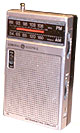
RadioSomebody(s) at Clear Channel has figured out “this Internet thing.” This article is worth a read.

There are probably some NASCAR formats on the air but I’ve never heard one. And I sure don’t expect to hear a station programmed for the gay community. I think this is a brilliant move and would like to hear some of the stuff they produce.

In a very short time, Rock, Country, Easy Listening, News/Talk and similar formats will seem quaint and anachronistic.

I know what you’re thinking. Why not program for gay NASCAR drivers? Why indeed?

Update: Google Audio Ads

From Inside AdWords blog: “Over the last year, we’ve been working hard to integrate the dMarc advertising platform into Google AdWords. We’re happy to announce that the integration is now complete and we’ve recently begun a U.S. beta test of Google Audio Ads with a small group of AdWords advertisers.”

If you haven’t been keeping up, here’s how Google describes their Audio Ads:

“Google Audio Ads brings efficiency, accountability, and enhanced ROI to radio advertising by providing advertisers with an online interface for creating and launching radio campaigns. You’ll be able to target your customers by location, station type, day of the week, and time of day. After the radio ads are run, you will be able to view online reports that tell you exactly when your ad played.”

A couple of days ago, Mark Ramsey (Hear 2.0) pointed us to an application page on the Google website.

Ad Specialist Application — Thank you for your interest in joining the Google Ad Creation Marketplace. We’re looking for some of the top audio ad specialists to join our Ad Creation Marketplace – a searchable directory of talent to help AdWords advertisers to create radio advertisements. For advertisers new to the radio space, or who are starting a new campaign, the Marketplace provides an invaluable starting point for finding the talent they need.

So, I decide to buy some Google Audio Ads. I search the Google Ad Creation Marketplace database for someone to write and produce my spot. We agree on a price. I send some copy. They email back an MP3 file. I’m off to the races. Maybe. Mr. Ramsey is skeptical and I confess I am too. But if it works… it could have a profound change on how advertiser buy and place ads.

Update: According to News.com, the radio ads are running in more than 260 metropolitan markets, covering about 87 percent of the country

Website: Expense or investment?

Mark Ramsey poses the following questions to broadcasters:

1. Is the purpose of your website just to put online what is already on the air, or is it something else?
2. Are we investing the necessary resources and talent in the development of our website, or are we having an intern update stuff in his spare time?
3. Are we giving people what they go to our station for in all its shapes and sizes on the web? Or are we offering one stream and a bunch of photos of our personalities?
4. If the content described in this article (Fast Company) can generate considerable traffic, can we convert that traffic to revenue? If so, why aren’t we investing for traffic instead of seeing our websites as expensive necessities?
5. If we keep crowing about how “local” our radio station is, exactly how does our website express that or service that?

Chicken LittleA couple of days ago, a broadcaster called me for advice on possible speakers/topics for an association meeting next spring. She wanted someone to come talk to them about “new media.” I asked her why?
“Uh, we need to figure out how to make some more money.” Or words to that effect.

I imagined thirsty villagers taking buckets and empty containers to a nearby well in hopes of finding water for their thirsty families.

I suggested that before you’d have anything to sell (to advertisers), you’d need to build an audience and that would take time and money. An investment.

“No, our owners won’t let us spend any money. We need to find some more money. That’s why we were thinking about the Internet.”

To completely exhaust the metaphor… if you don’t have the will or the resources to drill a new well… pray for rain.

RSS: ‘Ready for Some Stories’

Kevin O’Keefe (LexBlog) points to a really good explanation of RSS:

“RSS is a way online for you to get a quick list of the latest story headlines from all your favorite websites and blogs all in one place. How cool is that?

Suppose you have 50 sites and blogs that you like to visit regularly. Going to visit each website and blog everyday could take you hours. With RSS, you can ‘subscribe’ to a website or blog, and get ‘fed’ all the new headlines from all of these 50 sites and blogs in one list, and see what’s going on in minutes instead of hours. What a time saver!

That one place where your RSS list is created is called an RSS Reader, and it gathers all the headlines from all the websites and blogs you have subscribed to.”

I’m told IE7 does a nice job with RSS but I suspect I’ll stick with Google Reader.

Media Study: Radio Makes People Happy

That’s one of the findings in a new study by the Radio Advertising Effectiveness Lab. Harris International surveyed more than 2,500 people between the ages of 18 and 54 in June and July. (MediaWeek)

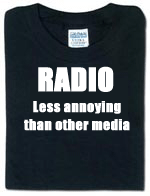
Less Annoying“Fifty-five percent of respondents said radio was the medium most likely to improve their mood compared to the other three media studied. The findings were generally true across all ages, genders, and ethnic groups, but especially strong for African-Americans and Hispanics.”

“Advertising on radio was also found to be less annoying than on other media. Comparing Internet ads to radio ads, 45 percent of respondents said radio ads are “repeated too often,” compared to 53 percent who said the same about Internet ads; 24 percent said radio ads “appear at inconvenient moments,” while 60 percent said the same of Internet advertising.”

The simple truth is most radio stations just have too many commercials. And too many of those commercials have no relevance for me. Yes, I understand that they ALL have relevance for someone… but in an iPod world, that truth is no longer relevant. I have to stop now, I’m out of italics. [Thanks, Chuck]

WSJ: “How to get attention in a New-Media World”

Wall Street JournalThat’s the headline on a story in today’s Wall Street Journal. I won’t bother posting any of the many nuggets in this piece. You can read them yourself. And if you spend anytime online, you know a lot of this already.

Here’s what I want to know: How can any intelligent, semi-educated, reasonably well informed, man or woman entrusted with running a business (or some division or department of that business) not have at least heard about the things referenced in this story (blogs, podcasts, RSS, etc etc)?

We talk to people every day that insist (and I belive them) they’ve never even heard the terms. I don’t expect the average Joe (or Joanne) to be as into this “new media” (someday we won’t need the quotation marks) as I am… and I know that not everyone has access to the Internet. But if you own a TV set, a radio, read a newspaper or a magazine… how could you not have seen or heard one or two of the countless stories about “new media” during the last couple of years?

* I just read the local sports scores in The Daily Bugle
* I only watch Wheel of Fortune and QVC on TV
* I haven’t seen anything in People Magazine about all this stuff
* Cousin Bob on Country 108.7 would tell me if any of this stuff was important

What do you know? I answered my own question.

Let me stress that I’m not saying your business should be using any of the new media tools (you should)… but I remain mystified that there are people who have not a glimmer that something is happening.

NAB Radio Show: The Newspaper of the Future

Scott Brandon’s latest dispatch from the NAB Radio Show (“How to Make Your Station Website the Newspaper of the Future”):

“We begin with internet problems. Not a good sign. Wish I had my camera. Feels like a college lecture hall. The session is led by Paul Coates from Branson. Roger Utnehmer (DoorCountyDailyNews.com) was scheduled to present but had to drop out due to illness.

Really, this thing was all about why to do it (revenue opportunities, audience movement) nothing much about how to do it. More “ain’t this neat” than anything else. Toward the end people started to push him for logistic info. At some point, Coates lost control and the herd took over. Lots of independent conversations and random questions being thrown out and answers coming from the gallery.

Some notes:

  • Traditional newspaper is continuing to decline. That means there is an opportunity to grab those non-traditional readers.
  • Radio can drive people to the web and make money. If newspaper drives you to web, they lose your traditional sub rev.
  • Your website has to supply news not history.
  • You already have news and sports departments.
  • You can charge premium price. Print buyers used to spending lots. Too low and it doesn’t seem worth it.
  • Sky is limit on content.
  • [More internet problems. Everyone in the crowd has advice.]
  • Fresh content is needed everyday and early in the morning. By 5:30 or 6:00.
  • His unique visitors have leveled out but his per-day visits have gone up. On average, each person visits 3 times a day. Guess what? They update the news 3 times a day.
  • “Show-me more” feature on Roger’s site allows sponsors to put up a video of their biz or offerings.
  • Hometowndailynews.com is working on adding a feature to their “area dining” section that will allow you to do on-line orders to your favorite restaurant.
  • Your site should have different name than station. Must be a full stand alone feel. Otherwise, people feel they are just spending more money/time on your station.
  • Did not hire new staff. Shuffle duties of existing staff.
  • Now we’re into legal stuff. Is it legal to link to google? Sigh.
  • Mistakes he made: 1) Have more patience; 2) Sell it to your staff first; 3) Crawl, walk, run”

Podcasting, broadcasting, advertising

Excellent interview at AdAge.com with Leo Laporte. Leo is the man behind TWiT (This Week in Technology), one of the most popular podcasts (monthly reach of 500,000). Which is why the podcast has attracted Dell, T-Mobile and Visa as advertisers. According to the AdAge piece, Laporte’s podcast mini-empire could rake in as much as $2 million dollars in a year, but he says he’s more concerned about how to not ruin the medium with advertising. Excerpts:

“…all podcasters agree that podcasting has more value than radio or almost everything and we deserve a high cost per thousands [of listeners] and are going to create an environment that’s worth it for advertisers. We don’t want to jam it for advertisers. And the audience will let you know — they’re not passive. It’s more of a conversation than a monologue. … We need to hold the line and really deliver quality advertising. It’s going to be hard at first, [podcasters will have to be] turning down advertisers, running fewer ads than you’d like, not take in as much money as you’d like. But if we can focus on delivering something of value we can make both advertisers and listeners happy.”

When asked if he thinks podcasts from mainstream media companies will exercise enough restraint in the advertising:

“I hope they screw it up. I see them as using podcasts to drive to their bread and butter. We’re narrowcasters and they’re broadcasters and there’s a big difference. “Ask a Ninja” wants to be “Seinfeld” but people like me and most I know are narrowcasters. We want to super-serve an audience and develop a relationship. [Broadcasters] see themselves as delivering a lot of people to advertisers and inefficiently. But those days are drying up. There will always be the Tides and Coca-Colas who can afford that but most companies in this modern world need to be efficient and they can be by using these new technologies.”

I have no doubt MSM companies (like ours) can produce quality podcasts. And, given our built-in promotional opportunities, we should be able to attract listeners. Will we “screw it up” when it comes to the advertising model? Don’t know. To be continued.

Early in the game

31.4% of Americans don’t have internet access; 88% of all users have never heard of RSS; 59% of American households have zero iPods in them; 30% of internet users in the US use a modem; Detroit (one million people) has six Starbucks.

Seth is reminding us “all the growth and opportunity and the fun is at the leading edge, at the place where change happens” and we’re living on a never-ending adoption curve. For those of us in media, who depend on advertising… I’d rather be early to the this dance than late.

Bonus Quote: Doing it for free

“…pioneers are almost never in it for the money. The smart ones figure out how to take a remarkable innovation and turn it into a living (or a bigger than big payout) but not the other way around. I think the reason is pretty obvious: when you try to make a profit from your innovation, you stop innovating too soon. You take the short payout because it’s too hard to stick around for the later one. ”