Watching movies/TV on the iPhone

The remote for our big LG TV died so I watched an episode of Mayor of Easttown on my iPhone last night. I do that from time to time and once again I found this a very satisfying experience. At no time did I have a sense of “this is such a tiny little screen.”

I asked Perplexity about typical movie/TV viewing distance on mobil phones:

“Studies that look at smartphone viewing distances for video and general “digital device” use show that phones are commonly viewed at around about 12–14 inches, similar to reading distance. Experimental work that tested video viewing at 20 cm vs. 40 cm used those as realistic “near” and “far” smartphone distances, supporting the idea that typical use falls somewhere between them, with averages in the low 30‑cm range.”

That’s pretty much me. Had the phone propped against a pillow on my stomach. This works for me (and others?) because the relative screen size is about the same, as I attempted to show in this 10 second video. Continue reading

Apple Watch Camera Remote + AirPods Pro 3

In our ongoing effort to “die broke” I ordered the new Apple Watch 11 and a set of AirPods Pro 3. As I wait for these new toys to arrive, I’ve started playing with the Camera Remote feature on the Apple Watch.
The idea is I can take a photo or video while the phone is across the room (or wherever). In the photo mode it captures a burst of images… and video works as you’d expect.

The AirPods Pro 3 has a number of cool new features, including recording audio from the AirPods instead of the iPhone. In this video (:13) it’s obvious the audio is being recorded from across the room. The new AirPods will also allow me to start and stop the video recording.


Apple AirPods: New Health Features

The upcoming Apple AirPods, particularly the anticipated AirPods Pro 3, are expected to bring a major expansion in health features, turning them into more than just audio devices. Here’s what to expect based on the latest information and insider reports:

  • Heart Rate Monitoring: AirPods Pro 3 are rumored to include sensors capable of monitoring your heart rate from inside your ear canal. This will provide an additional method of capturing health data, complementing what’s currently done by the Apple Watch.
  • In-Ear Temperature Sensing: Apple is reportedly developing in-ear temperature sensors, which can deliver more accurate fever detection and overall body temperature measurement compared to wrist-based sensors. This could be particularly useful for early illness detection and general wellness tracking.
  • Hearing Health Features (Already in AirPods Pro 2): AirPods Pro 2 already offer a clinically-validated hearing test and an FDA-cleared over-the-counter hearing aid mode, making them the world’s first all-in-one hearing health device. The Pro 3 are expected to continue and possibly expand on these features, integrating more hearing health tools and diagnostics.
  • Potential Blood Oxygen and Stress Sensors: Future AirPods models may add even more sensors to monitor blood oxygen levels and provide stress indicators, though these features are reportedly in earlier stages of development[1].
  • Live Translation: Upcoming AirPods models are also expected to receive live translation functionality via software updates, leveraging the device’s microphones and on-device AI to provide real-time language translation during conversations.
  • Broader Health Integration: Apple aims for AirPods Pro 3 to become part of a comprehensive health monitoring platform. Health data from the AirPods may eventually integrate with Apple Health and even electronic medical records, enabling more meaningful health insights and possibly even preventive health alerts powered by AI[.
  • Infrared Camera (Rumored): Some rumors suggest a delay in launch is due to production challenges related to a new infrared camera system in AirPods Pro 3, intended to power advanced health features, though this remains unconfirmed and may delay the release to 2026.

Summary

In short: AirPods Pro 3 are set to introduce heart rate and temperature monitoring, enhanced hearing health tools, real-time translation, and the groundwork for even more advanced health sensing in future models. These additions could make AirPods a central device for daily wellness and medical monitoring, blurring the lines between headphones and health wearables.

Seeing AirPods everywhere

Seems like I’m seeing more and more Apple Watches and AirPods these days. Might be because I recently got an Apple Watch and have my AirPods in most of the time. 

I asked this gentleman how he liked his AirPods and he said he loved ‘em! Which got me thinking about tech preferences by age groups.

While exact figures for iPhone purchases by those over 60 are scarce, the data suggests that approximately 23% to 49% of older adults use iPhones, depending on the specific age range and data source. This reflects a notable presence of iPhone users in this demographic, though Android holds a slight edge among older generations.

Among wearable device owners, the Apple Watch is the most-owned, with 44.14% of respondents in a study indicating they owned one. Health monitoring features, such as heart rate tracking and fall detection, are particularly appealing to this demographic.

Couldn’t find any data on AirPods by demo.

The sound of silence

I have breakfast most mornings at a local diner which can be a little noisy. Shouted orders, bussing tables, lots of conversation. What you’d expect from a busy diner.

As I do every morning, I inserted my AirPods to listen/watch a video… and the room became dead silent. I don’t know how else to describe it. For a split second I thought something might be wrong with my hearing but when I removed my AirPods all the normal sounds came flooding back.

Let’s jump back a couple of weeks to when I got my new AirPods 4 (with Adaptive Noise feature). I played with that for a minute or two then turned it off with the intention of experimenting later.

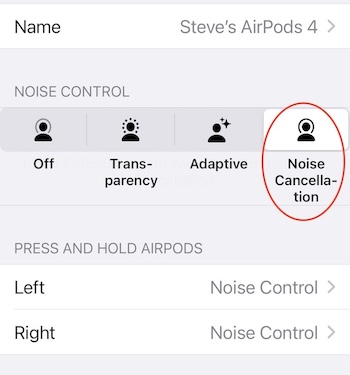
Apple pushed an update to iOS a couple of days ago and I’m guessing the “noise control” feature got reset. Here are the four settings:

1. Off: This disables any noise control, meaning you won’t get any additional noise isolation or transparency. You hear everything around you naturally.

2. Transparency: This setting allows external sounds to pass through so you can hear what’s happening around you while still listening to audio. It’s useful for staying aware of your environment.

3. Adaptive: This new setting automatically adjusts the level of noise cancellation and transparency in response to your surroundings. It tailors the experience based on the noise levels and movements around you.

4. Noise Cancellation: This mode blocks out external sounds by using microphones to pick up ambient noise and counter it with anti-noise signals. It’s great for immersive listening in noisy environments.

I wear ear protectors when I shooting a gun, and I’ve stuck little rubber plugs in my ears when trying to sleep in a noisy hotel room. And I’ve recently started wearing big over-the-ears protectors when driving the Land Rover. But I’ve experienced this kind of near-silence. Almost eerie.

AirPods at the Olympics

I don’t watch a lot of TV news these days but when I do happen upon a cable news interview the odds are pretty good the interviewee will have the iconic Apple AirPods in his ear. That’s how he’s hearing the questions from the news guy. It never occurred to me the AirPod microphones might be the source of the audio.

Tonight I watched an interview (on NBC) with one of the Olympic athletes who was using AirPods to hear the questions from the interviewer.

I first noticed this in some of the interviews with family members (of the athlete) sitting in the stands. I’m assuming this works like the earpiece (IFB) news anchors use to communicate with the control room. In every instance (that I’ve seen) they’ve been Apple AirPods when there are probably lots of devices NBC could have used.

As I do with increasing frequency these days, I asked ChatGPT if she had any information on this.


You’re right that NBC and other networks have been seen using Apple AirPods during interviews, including with Olympic athletes and their families. The use of AirPods in these situations is a practical solution for a few reasons:

1.Wireless Convenience: AirPods are wireless, which makes them less cumbersome compared to traditional wired earpieces or over-the-ear headphones. This is especially useful in dynamic or remote settings, like interviewing athletes or their families who may be moving around or in informal environments.

2.High-Quality Audio: AirPods provide good audio quality, which ensures that the person being interviewed can clearly hear the questions being asked. This clarity is crucial for maintaining the flow of live interviews, especially in noisy or crowded environments like those often encountered during the Olympics.

3.Discreet Appearance: AirPods are small and less noticeable on camera compared to larger headphones or traditional broadcast earpieces. This makes them a more aesthetically pleasing choice for televised interviews, where the focus is on the interviewee rather than the equipment.

4.Ease of Use: AirPods are easy to connect to various devices, such as smartphones, which are often used by reporters or production teams in the field to conduct interviews. Their ease of use and quick setup make them an efficient choice for live broadcasting situations.

5.Ubiquity and Familiarity: AirPods are widely recognized and used, so many people are already familiar with how to use them. This reduces the need for technical adjustments or explanations during setup.

NBC’s use of AirPods is a modern adaptation to the challenges of broadcasting in various environments, offering a blend of practicality, quality, and aesthetics.


Personalized Spatial Audio

I developed an appreciation for good audio headphones during my time at KBOA back in the ’70s. Not so much for the music as much as wanting/needing to hear my voice as the listener was hearing it. Too close to the microphone? Too far away? Popping my “P’s?” I’ve purchased a lot of headphones over the years, always searching for the perfect set.

I used Apple’s wired earbuds during the iPod days and thought the music sounded fine. I never purchased another set of “cans.” I purchased my first set of Apple AirPods in 2016 and have been using them ever since. They fit my ears perfectly. So well, in fact, that I forget I have them in. Unfortunately, that means I don’t notice if one falls out which happened last week. The Find My app on my phone told me where I last had the AirPod but I never found it.

When I got my new AirPods my buddy George asked if i had configured them to take advantage of Personalized Spatial Audio. I vaguely recalled reading about this feature but don’t think I ever used it. As good as I thought the AirPods were before, this bit of tech magic was impressive.

(Perplexity) It uses the TrueDepth camera on newer iPhones to scan your face and ears. This captures data about the geometry and contours of your head and ear position. This personalized profile is then used to optimize how spatial audio is rendered through your AirPods or Beats headphones. It adjusts the sound to account for your ear shape and head size, providing a more immersive 3D audio experience tailored specifically to your anatomy.

Songs I’ve listened to a thousand times sound fresh and new. So, yeah, I’ve become one of those people walking around with tiny white things in my ears. More and more I’m using Siri to schedule reminders, send messages, check the weather, jot down a note… you get the idea. My phone stays in my bag more these days and when at home, I leave it on the table and interact via AirPods (as long as phone and pods are on same wifi network.

This will get even more interesting this fall when I take the Apple Watch (with cellular) plunge.

AirPods 3

I don’t remember when I got my first set of headphones. According to Wikipedia, until the mid-1960s, record companies mixed and released most popular music in mono. From mid-1960s until the early 1970s, major recordings were commonly released in both mono and stereo. In the ’60s The Beach Boys, Frank Zappa and The Beatles were among the first big artists to play around with multitrack recording.

Dolby started showing up in recording studios in 1966 and quadraphonic sound was introduced in the early ’70s but always seemed kind of gimmicky to me.

I know I started buying headphones in the early 70s when I went to work at KBOA. Sennheiser, Bose, you name it… I tried them all. And the good ones were expensive (and fragile). I was never an audiophile. WLS on an AM car radio sounded damned good to 17-year-old me. I never had a Sony Walkman but did get an iPod when they showed up. And the tiny earbuds sounded pretty good to me. Hard to believe it was as recent as 2016 when Apple introduced AirPods. I thought their wired earbuds were fine… until I tried the Bluetooth AirPods. And I’ve had a set ever since.

I hadn’t paid much attention to all the hype about the third generation AirPods but when I saw the launch event a couple of weeks ago, I decided to try a pair. Just to see (or hear, in this case).

To my pedestrian ears, stereo music meant base in one ear, treble in the other, and the vocal track somewhere in the middle. The new AirPods are — for me — living up to the hype. Not sure I can describe what I’m hearing. It really does sound like I’m in a big room (recording studio?) with instruments and singers all around me. It’s a strange feeling. Music is such a perceptual thing it’s difficult to describe. Songs I’ve listened to hundreds (thousands?) of times, sound new and fresh.

Apple will give you chapter and verse on how the new AirPods work but the music I’m now hearing (feeling?) seems impossible. Someone described it as witchcraft.

AirPods vs. “cans”

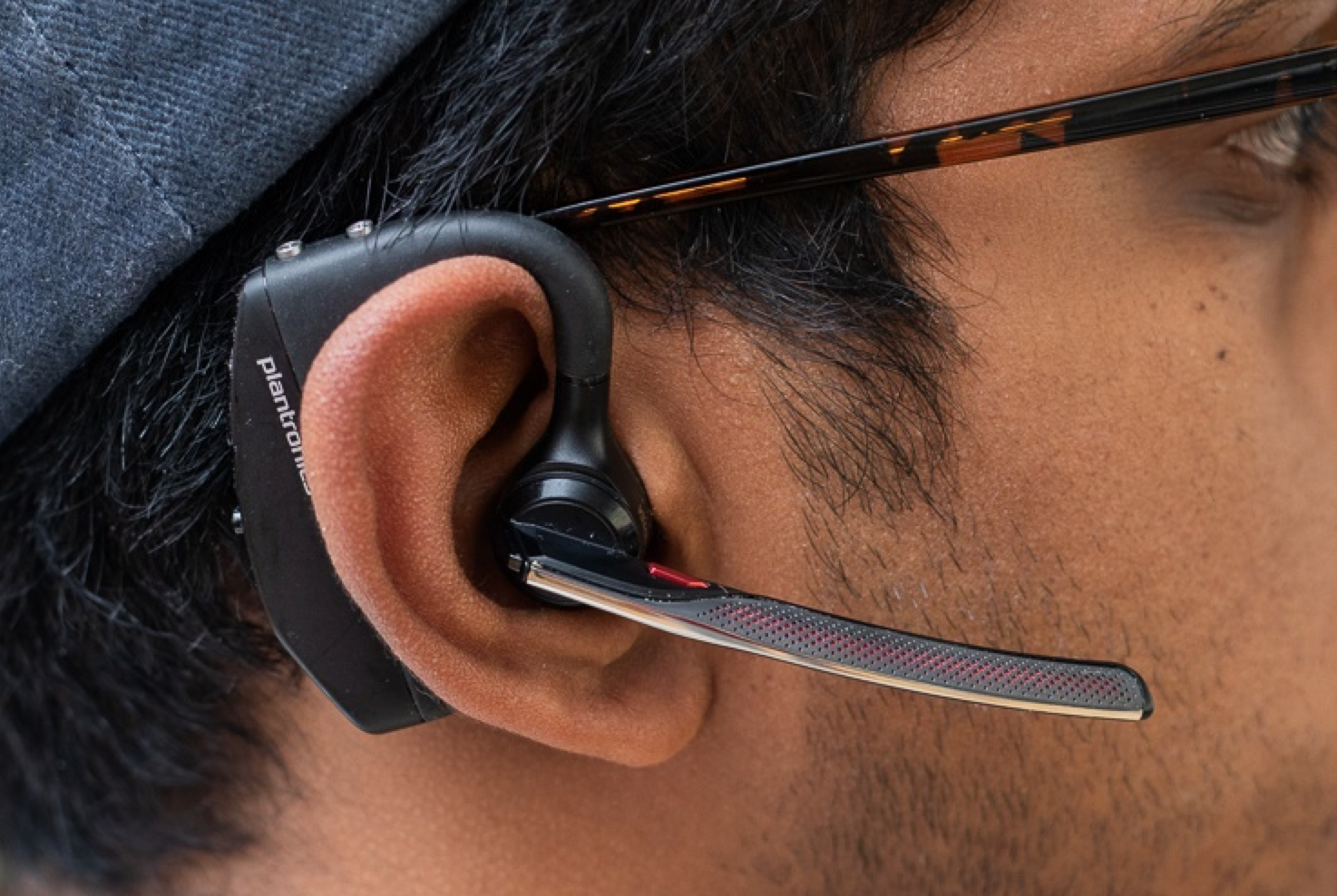
Seems like only yesterday wearing a Blue Tooth earbud/mic made you the subject of derision. A techno-hipster intent on impressing everyone with his hands-free phone calls.

Fast-forward to the Apple AirPods, which also got you some snickers. A lot for snickers. But it turns out AirPods work pretty well and I started seeing them everywhere. The FedEx guy. The crew chief that oversaw our new roof. The guy that mows our yard (yeah, yeah).

The plague hits and Zoom becomes a generic term (“I was zooming all day”). And those TV “at home” interviews? Lots of AirPods. So many that when I see someone wear a big old set of cans I think, poor dweeb.

Like these two guys being interviewed by Bill Maher. I know, I know… superior audio quality!