Learfield Sports Operations: Then and Now

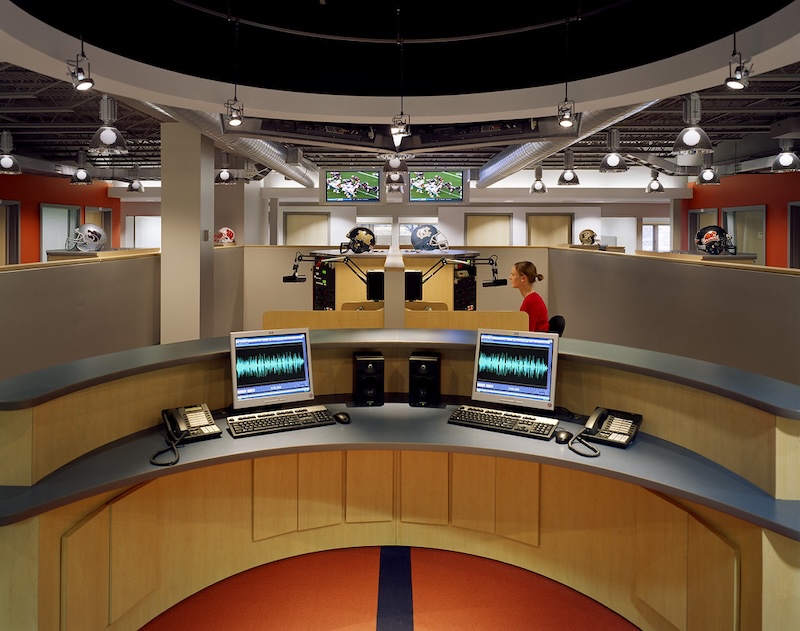
The Learfield Sports Operations Center is a real thing of beauty. Great equipment, well designed. A really nice place to produce sports broadcasts. It wasn’t always so. My recent photo spelunk turned up this shot taken in the basement of Learfield’s former headquarters, an old house on McCarty Street. Kim Steiner (the guy in the photo) was about 5′ 7″.
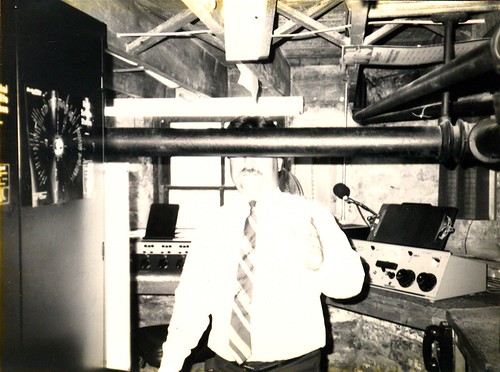
In 1984, we began producing the broadcasts for Iowa State, Oklahoma State and Kansas. We already had the rights to Missouri and were producing those broadcasts in a studio shared with The Missourinet. Because there was absolutely no more room for studios, the engineers jammed some small mixing consoles into a corner space in the basement (where the engineers also lived).

Cramped, dusty and… dangerous. You could always recognize the new guys by the contusions and lacerations on their foreheads.

Internet passes radio as “most essential” media

“Less than one of five Americans (17%) say radio is their most important medium for information and entertainment. That’s down from 26% in 2002. What’s changing is obvious – the Internet is quickly becoming a turn-to medium. One-third of Americans say it’s now the most important — compared to 36% who pick TV. A big jump from 2002 when just 20% said the Web. A new Edison Media Research report also shows the Internet and TV have swapped places as the “most cool and exciting” media with 38% now picking the Web versus 35% for TV. Edison’s report also finds newspapers are most-often picked as the “least essential” medium by 35% of consumers. It’s followed by the Internet with 24%. Both radio and TV had the fewest mentions at 18%.”– Inside Radio

Blurring the lines between fan and sportswriter

Thanks to Edward for pointing to this story on the Kansas City Star website about sports blogging:

Meet the new American sports fan — an Internet-induced mix of sportswriter, play-by-play announcer, talking head and regular guy. His name is Will McDonald and, from his one-bedroom apartment in Cleveland, the University of Iowa doctoral student, painstakingly records, on his blog, the comings and goings of each Kansas City Royals game.

For the sports world — the fans, the players, the leagues and the teams — the rise of the blogger has raised complicated questions about broadcasting rights, how to reach an audience, and where the sports fan stops and the journalist begins.

The lines have blurred so much, in fact, that the New York Islanders plan to give bloggers their own box next season. So much that the NCAA escorted a reporter out of the press box two weeks ago for blogging a live baseball game. So blurred that sports teams are holding meetings about how to handle the rise of the blogger, and no one seems to know what comes next.

I could be wrong, but I think the Islanders are on the right track.