Author Tim O’Reilly says the central theme of this book is understanding how algorithmic systems shape our society. If that’s what you’re after, I recommend two books by Kevin Kelly: The Inevitable: Understanding the 12 Technological Forces That Will Shape Our Future and What Technology Wants. Then I’d read Homo Deus and Sapiens by Yuval Noah Harari. I’m sorry, but Mr. O’Reilly’s ideas just didn’t flow. The book felt… patchy. And he seemed overly proud of his personal contribution to the Internet, to Web 2.0, and a bunch of other “innovations.” I don’t question his contributions but isn’t it better if other folks acknowledge them? Anyhoo, here are some passages I underlined:
Our experience is shaped by the words we use.
Abstractions – the process by which reality is transformed into a series of statements about reality.
“For all practical purposes, there is now only one computer.” — Clay Shirky
The first principle of Web 2.0 was that the Internet was replacing Windows as the dominant platform on which the next generation of applications was being built.
Another key to what distinguished the web applications that survived the dot-com bust from those that died was that the survivors all, in one way or another, worked to harness the collective intelligence of their users.
“Global consciousness is that thing that decided that decaffeinated coffee pots should be orange.” — Computer scientist Danny Hill
Once an event occurs, all possibilities collapse into the one reality that we call the present, and then, in an instant, the past. But even the past, seemingly fixed as it appears, is an illusion constantly updated by new knowledge from the present.
A key lesson for every entrepreneur – Ask yourself: What is unthinkable?
“Apps can do now what managers used to do.” — Finnish management consultant Esko Kilpi
More than 63 million Americans (roughly half of all households) are now enrolled in Amazon Prime. Amazon has more than 200 million active credit card accounts; 55% of online shoppers now begin their search at Amazon, and 46% of all nine shopping happens on the platform.
A company is now a hybrid organism, made up of people and machines.
There are more than 2 million apps for the iPhone and they have been downloaded 130 billion times. App developers have earned nearly $50 billion in revenue.
With the rise of GPS, we are heading for a future where speeding motorists are no longer pulled over by police officers who happen to spot them, but instead automatically ticketed whenever they exceed the speed limit. We can also imagine a future in which that speed limit is automatically adjusted based on the amount of traffic, weather conditions, and other variable conditions that make a higher or lower speed more appropriate than the static limit that is posted today.
One of the simplest algorithmic interventions Facebook and Twitter could make would be to ask people, “Are you sure you want to share that link? You don’t appear to have read the story.
Subscription-based publication have an incentive to serve their readers; advertising-based publications have an incentive to server their advertisers.
We are increasingly creating an economy that is producing too much of what only some people can afford to buy.
“The job” is an artificial construct, in which work is managed and parceled out by corporations and other institutions, to which individuals must apply to participate in doing the work.
“There may need to be two kinds of money: machine money, and human money. Machine money is what you use to to buy things that are produced by machines. These things are always getting cheaper. Human money is what you use to buy things that only humans can produce.” — Paul Buchheit (creator of Gmail)
The rich still live in a world where doctors make house calls and personal tutoring is the norm.
“If you want to understand the future, just look at what rich people do today.” — Hal Varian, Google’s chief economist
In a connected world where knowledge is available on demand, we need to rethink what people need to know and how they come to know it.
More than 100 million hours of how-to video were watched on YouTube in North America during the first four months of 2015.
Who will buy the products of companies that no longer pay workers to create them?

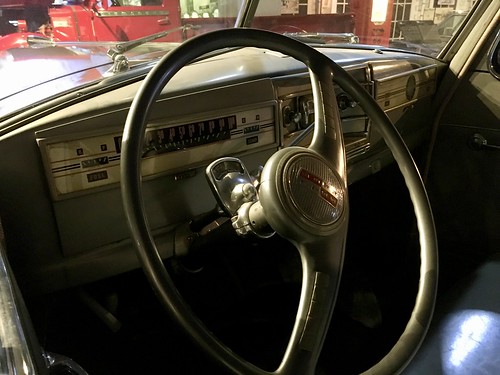


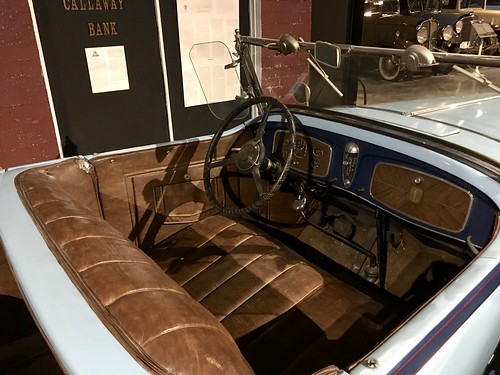









 Nothing says “Land Rover” like the spare tire mounted on the bonnet. It’s iconic. And I was fine with keeping mine there until I discovered how difficult it was to open up the engine compartment. Something I plan to do almost daily. It was damned heavy. I did it but will I be able to in five years? Or ten?