The dot-com bubble (and subsequent crash) happened over a two-and-a-half-year period between 2000 and 2002 (the year I started the blog). I was reminded of this period while watching a video comparing the current AI frenzy to Tulip Mania back in the 17th century.
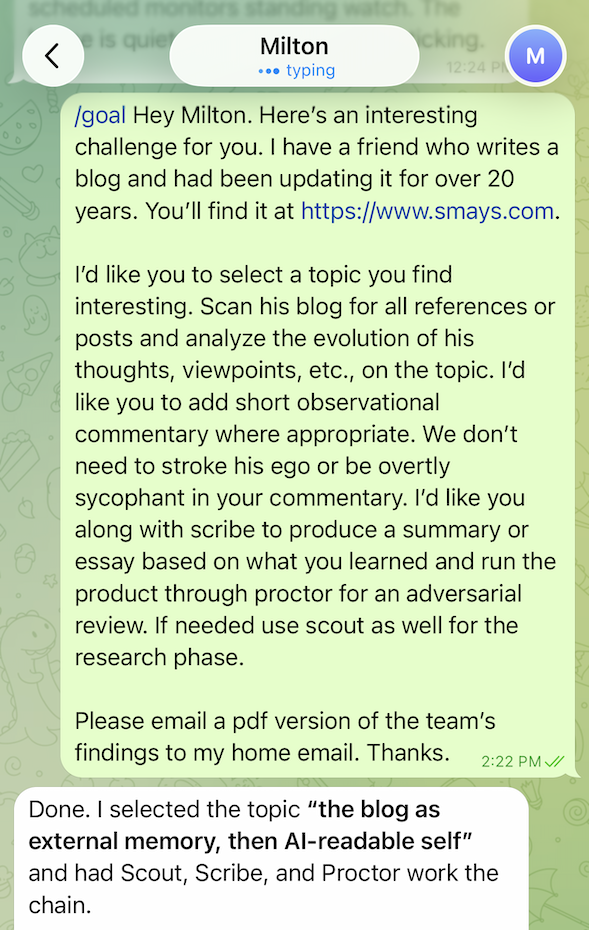
I couldn’t remember if my early blog posts touched on the dot-com period so I prompted Perplexity to take a look and it came back with a “looking back at the dot‑com bubble” post (see below). This is just the latest example of how my resolve to not let AI bots write my blog posts is slowly eroding. After one read I knew I could not improve on this summary.
(Perplexity) If my archive is any indication, I didn’t spend the bubble years themselves writing hot takes about it. The more interesting stuff came later, in the early 2000s, when it was obvious the web had outlived its first speculative fever dream.
One of the clearest snapshots is a June 11, 2003 post I titled “Markets as conversations,” where I pulled a quote (via Denise Howell / David Weinberger) that still reads like a verdict on the whole episode: “The Bubble was never what the Internet was about. The Web is not primarily a commercial space, not even primarily an information space… The bubble went away, but the Web absolutely didn’t. The Web remains interesting and important.” I didn’t add much commentary because I didn’t need to; posting it was endorsement enough.
By April 2005, I was pointing readers to a BusinessWeek cover story, “Blogs Will Change Your Business,” and highlighting this contrast: “The dot‑com era was powered by companies — complete with programmers, marketing budgets, Aeron chairs, and burn rates. The masses of bloggers, by contrast, are normal folks with computers… and — that’s right — no bubble.” I liked that line so much I reproduced the whole setup, emphasizing that we’d moved from company‑driven “New Economy” hype to what they called “media of the masses.”
Around those posts, there’s a steady drip of “Early Net Culture” items that implicitly answer the question, “What actually survived the crash?” In June 2003 I noted Google News beating BBC and MSNBC for a Webby and mused about how AP’s real asset had been its “connectedness” — something the open web was now replicating for everyone. The question “Can we agree that has changed forever?” wasn’t framed as bubble commentary, but it’s about what didn’t revert to normal once the NASDAQ fell.
A couple of years later I was citing ad forecasts that put Google and Yahoo’s combined online ad revenue on par with the prime‑time haul of ABC, CBS and NBC, calling it a “watershed moment” in the evolution of the internet as an advertising medium. If the bubble was about speculative eyeballs, this was about actual budgets moving. Same network executives, different direction for the money.
So, reading my own trail backwards, my “dot‑com bubble” coverage is less about the boom and crash and more about the quiet, durable things that came after: the idea that the web was never just a stock chart; that normal people with cheap tools and “no burn rate” might be more important than the Aeron‑chair start‑ups; and that news, advertising, and culture were re‑routing themselves through a network that turned out not to be a fad.