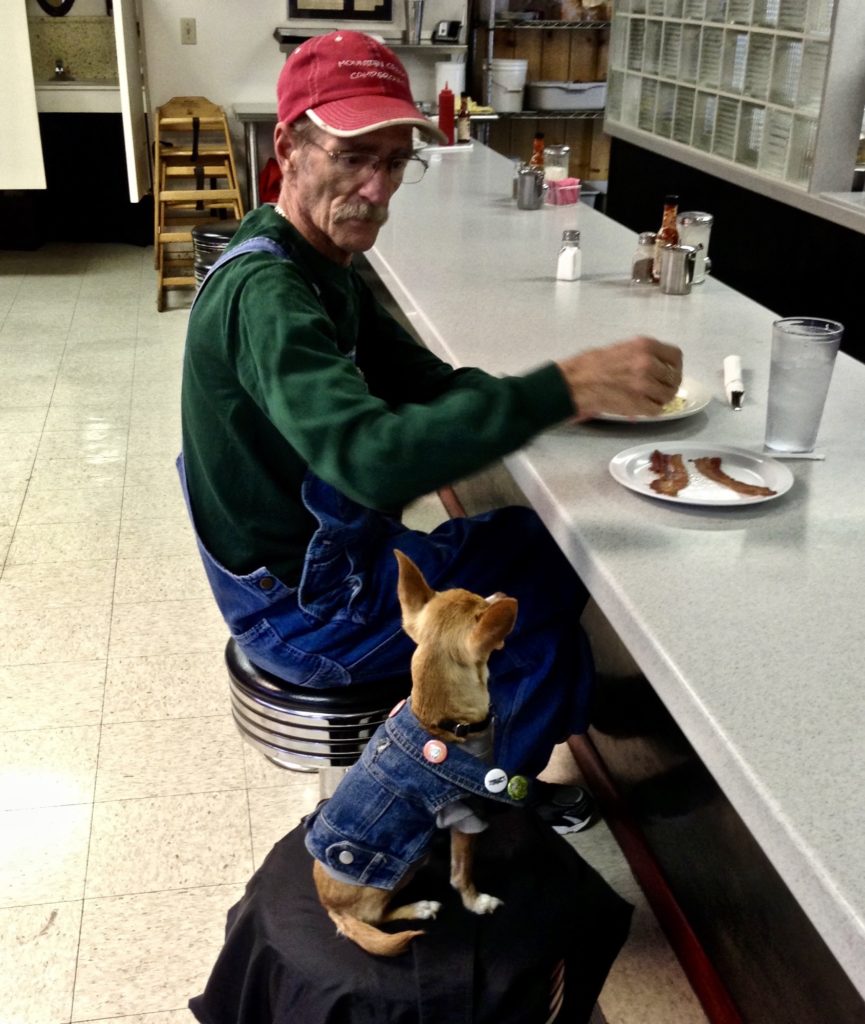
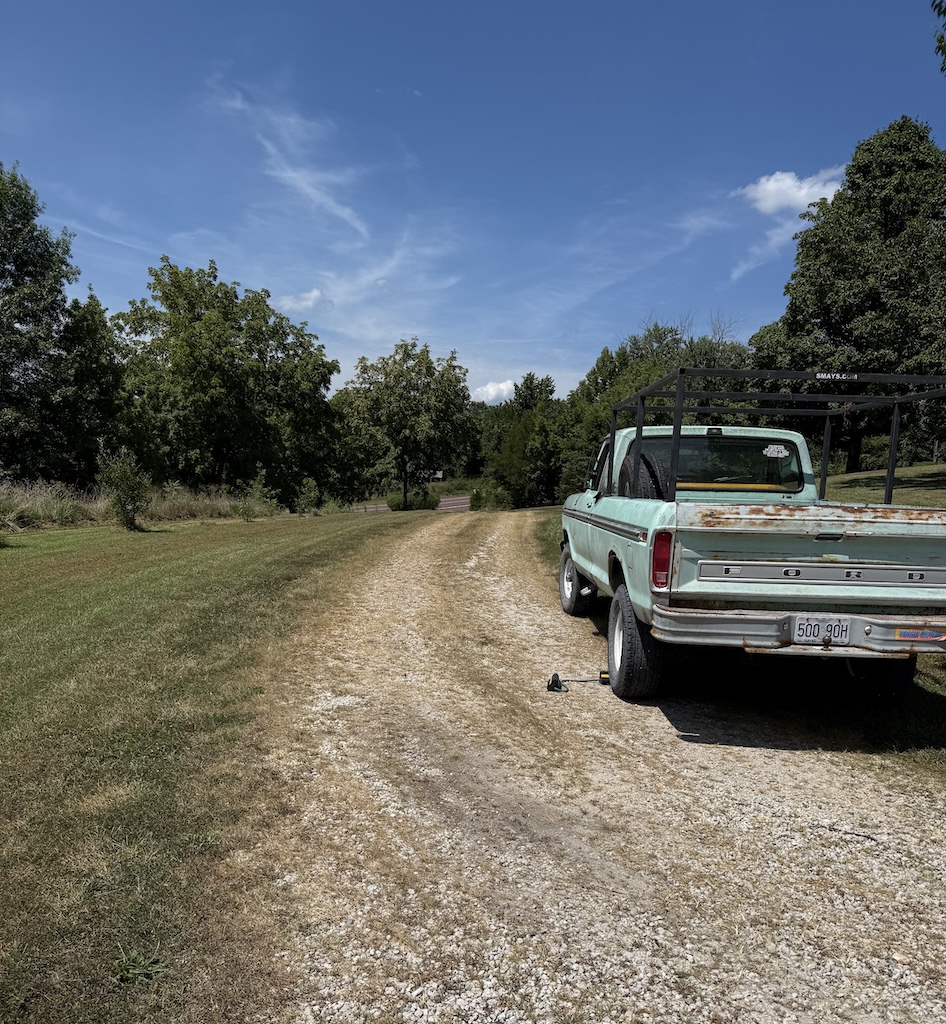
Regular readers (if such people exist) of this blog know who Paul Bandelier is. I’m usually at his shop a couple of times a week to eat pizza, watch guys work on old Mustangs and pickup trucks, and feed a biscuit to his dog Lily. I usually park on a stretch of gravel road (red arrow) that cuts across one corner of his property.
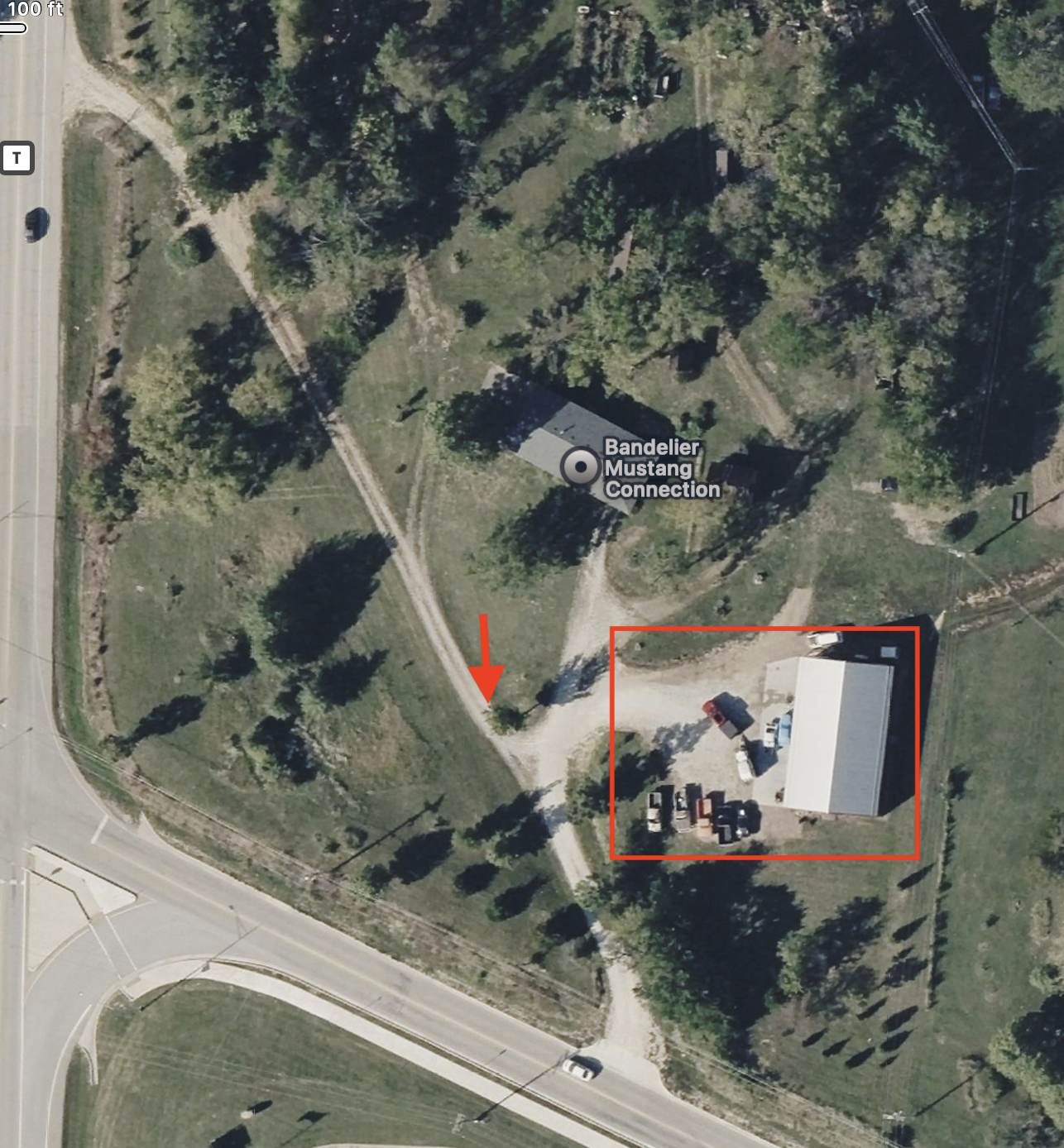 As I was leaving yesterday Paul’s father (Ron) said, “Where you’re parked used to be Highway 50.” More accurately, the family farm was situated on the main road that once consisted of dirt and gravel, pre-dating U.S. Highway 50.
 Prior to widespread paving, many major highways—especially cross-state routes like early US highway alignments were often gravel or graded dirt. A notable example is old Route 66, which was entirely gravel or graded dirt until 1938, when it became the first fully paved U.S. Highway. For mid-Missouri roads, gravel surfacing in the 1920s and ’30s was common, and paving often didn’t occur until late 1930s or early 1940s.
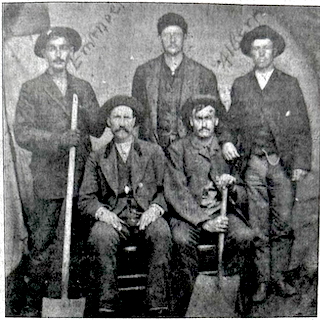 I became acquainted with Paul Bandelier and his father Ron in 2018 when I fell in love with the old pickup truck he had for sale. I’ve visited often enough to hear bits and pieces about the rich history of their family (see tag below) and a couple of days ago I noticed a framed newspaper story in Paul’s shop. The headline read, “Bandelier property has coal mining, entertainment legacy.”