
Good article in Business Week about how difficult it is to make a living as a podcaster. Seems I am one of about 35,000 daily listeners to Keith and the Girl:
“Keith Malley and Chemda Khalili, the couple behind Keith and the Girl, an engaging, sometimes raunchy Howard Stern-like podcast, have cultivated a devoted online audience. (Six fans have already had Keith and the Girl tattoos done.) The show, which has 35,000 daily listeners, is just one part of the brand. Just as important to fans are the online forums and MySpace.com (NWS ) pages where they gather to talk about the show and their lives. As a result of this devotion, the audience last year was willing to snap up about $80,000 worth of T-shirts, key chains, and other merchandise.”
Some would argue that $80K ain’t bad for just shooting the shit for an hour a day. But, as a regular listener, sounds to me like they’re working damned hard and earning every penny.
 The “West Virginia” printed on the shirts players wore after winning the NIT title with a 78-73 victory over Clemson on Thursday night is missing the last “i” in “Virginia.” WVU sports information director Shelly Poe said the NIT printed the shirts.
 I’m a big fan of the Keith and the Girl podcast. If you have never listened you can skip this post because it probably won’t make any sense. Keith is a sort-of stand-up comic who shoots the shit with his girlfriend, Chemda, for an hour every day. Explicit content. Not for sissies. I love the show.
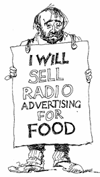 That’s the prediction of Google Audio national director of sales Drew Hilles tells Inside Radio “Our main goal is to draw new advertisers to radio” and when they do that’ll put pressure on inventory and result in higher rates for all buyers. The onetime CBS Radio exec says “our goal is to raise rates” and return the sector to double-digit growth. He says one way they help preserve a station’s rate card integrity is by allowing buyers to pick markets — but not individual stations. And Hilles says “stations have control of the throttle of how much of the inventory they open up or not.” Hilles says Google is working to attract some of its existing 100,000 advertisers who have found radio too tough to buy. Hilles says what attracts them is the “more Googley way” they sell radio that affords buyers more accountability and trackability. Google says “a large amount” of the advertisers are new to radio. [