
- What Is Tao? – Alan Watts [notes]
- Tao: The Watercourse Way – Alan Watts [notes]
- The Life-Changing Magic of Tidying Up: The Japanese Art of Decluttering and Organizing – Marie Kondo [notes]
- Freedom from the Known – Jiddu Kirshnamurti
- This Is It: and Other Essays on Zen and Spiritual Experience – Alan Watts [notes]
- The Spirit of Zen: A Way of Life, Work and Art in the Far East [notes]
- The Book: On the Taboo Against Knowing Who You Are – Alan Watts [notes]
- Buddhism Without Beliefs: A Contemporary Guide to Awakening – Stephen Batchelor [notes]
- The Sound of Silence: Selected Teachings of Ajahn Sumedho
- Be As You Are: The Teachings of Sri Ramana Maharshi [notes]
- Ten Zen Questions – Susan Blackmore [notes]
- Wherever You Go, There You Are – Jon Kabat-Zinn [notes]
- Opening the Hand of Thought: Foundations of Zen Buddhist Practice – Kosho Uchiyama Roshi
- I Am That – Nisargadatta Maharaj [notes]
- Rebel Buddha: A Guide to a Revolution of Mind – Dzogchen Ponlop
- Awakening the Buddha Within: Tibetan Wisdom for the Western World – Lama Surya Das
- Zen Mind, Beginner’s Mind – Shunryu Suzuki
- Living As A River: Finding Fearlessness in the Face of Change – Bodhipaksa [notes]
- The Tao of Zen – Ray Grigg [notes]
- Buddhism Plain and Simple – Steve Hagen [notes]
- The Way of Zen – Alan Watts [notes]
- Buddha’s Brain: The Practical Neuroscience of Happiness, Love and Wisdom – Rick Hanson [notes]
- Still the Mind: An Introduction to Meditation – Alan Watts [notes]
- Meditation Now or Never – Steve Hagen [notes]
- The Tao of Meditation: Way to Enlightenment – Jou Tsung Hwa
Category Archives: Books
Reading list: Consciousness
- The Big Picture: On the Origins of Life, Meaning, and the Universe Itself – Sean Carroll | My notes
- Consciousness and the Social Brain – Michael S. A. Graziano | My notes
- What Technology Wants – Kevin Kelly | My notes
- The Ego Trick – Julian Baggini | My Notes
- The Self Illusion: How the Social Brain Creates Identity – Bruce Hood | My Notes
- Thinking, Fast and Slow – Daniel Kahneman | My notes
- Incognito: The Secret Lives of the Brain – David Eagleman | My notes
- The Ego Tunnel: The Science of the Mind and the Myth of the Self – Thomas Metzinger | My notes
- Quantum Enigma: Physics Encounters Consciousness – Bruce Rosenblum | My notes
- Biocentrism: How Life and Consciousness Are the Keys to Understanding the True Nature of the Universe – Robert Lanza | My notes
The Big Picture
The Big Picture: On the Origins of Life, Meaning, and the Universe Itself. By Sean Carroll
 Life is a process, not a substance, and it is necessarily temporary.
For a long time, there has been a shared view that there is some meaning, out there somewhere, waiting to be discovered and acknowledged. There is a point to all this; things happen for a reason. […] Gradually, our confidence in this view has begun to erode.
“Life” and “consciousness” do not denote essences distinct from matter; they are ways of talking about phenomena that emerge from the interplay of extraordinarily complex systems.
At a fundamental level, there aren’t separate “living things” and “nonliving things,” “things here on Earth” and “things up in the sky,” “matter” and “spirit.” There is just the basic stuff of reality, appearing to us in many different forms. […] We will ultimately understand the world as a single, unified reality, not caused or sustained or influenced by anything outside itself. That’s a big deal.
The only reliable way of learning about the world is by observing it. Continue reading
LibraryThing (update)
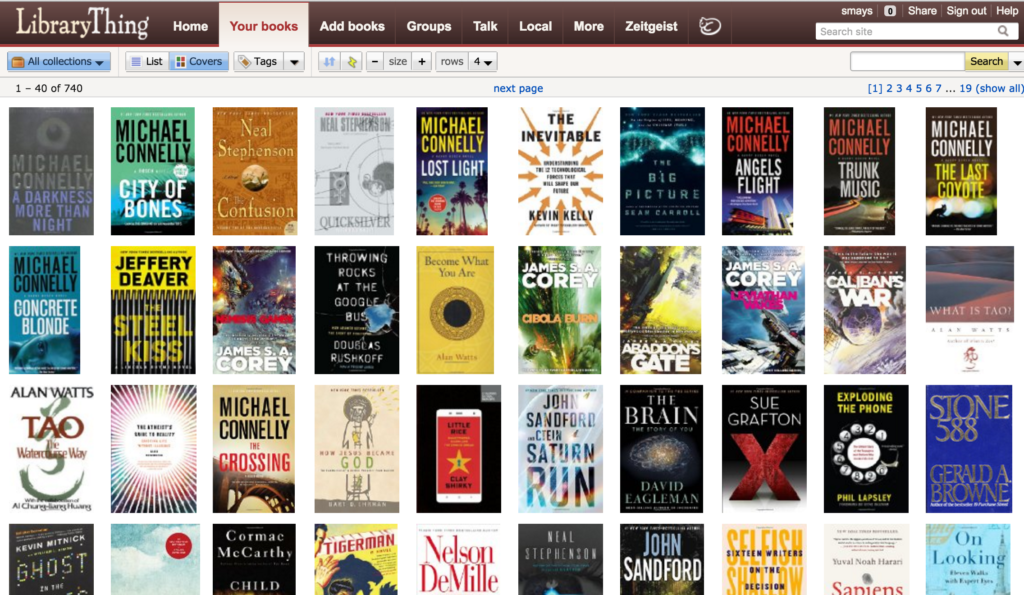 I started using LibraryThing to manage my library in 2005, about a month after the service launched. I was using a spreadsheet for this task but quickly fell in love with the tools and features LibraryThing provided. I find their smartphone app very handy.
I have 740 titles in my LibraryThing long ago gave away most of the books. Someone calling themselves eandino2012 has more than 81 thousand titles in her/his LibraryThing.
If you’ve considered using a service like LT or Goodreads but dreaded the task of uploading all your book titles, LT has a good import tool (see below) and their smartphone app can scan ISBN barcodes. Neither of those were around back in 2005 so I entered mine one at a time.

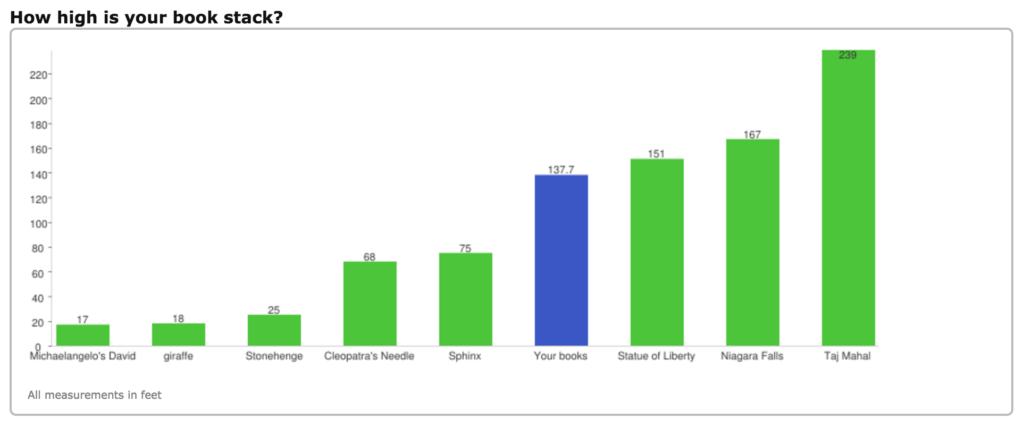
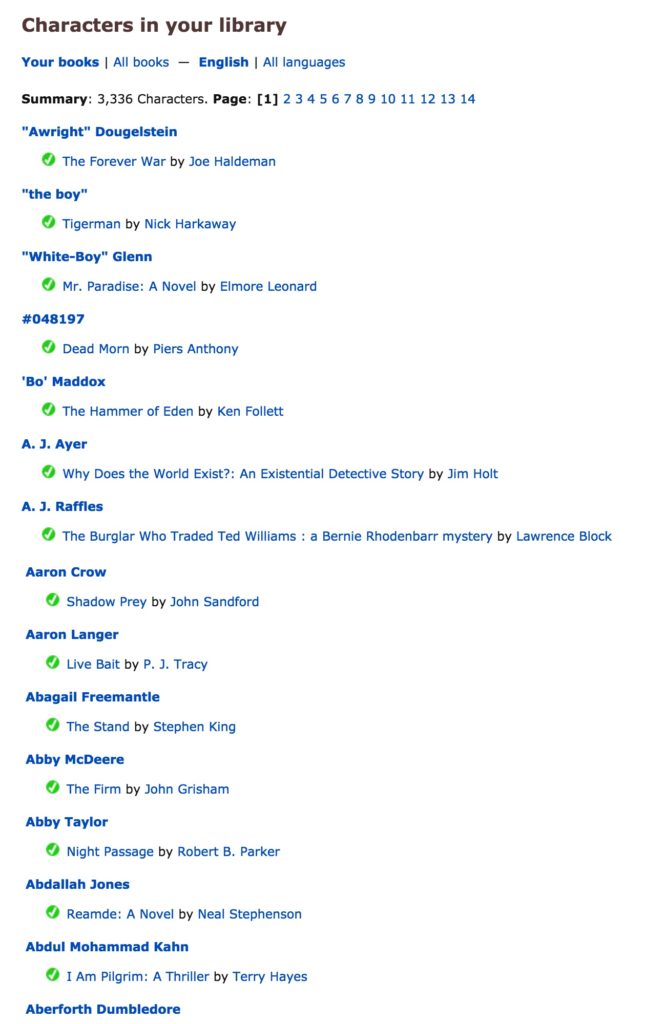
LT does some fun stuff (total cubic feet of your books; how high if stacked, etc) and some useful (to me) stuff: list of all characters in the books in your LT.
I know of no better use of my time than reading. Books are important to me. LibraryThing is a way to extend the pleasure I get from books.
The Inevitable
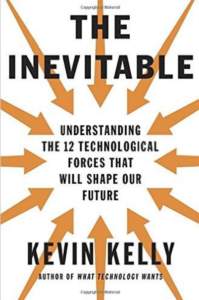 “Thousands of years from now, when historians review the past, our ancient time here at the beginning of the third millennium will be seen as an amazing moment. This is the time when inhabitants of this planet first linked themselves together into one very large thing. Later the very large thing would become even larger, but you and I are alive at the moment when it first awoke. Future people will envy us, wishing they could have witnessed the birth we saw.”
“This very large thing (the net) provides a new way of thinking (perfect search, total recall, planetary scope) and a new mind for an old species. It is the Beginning. […] At its core 7 billion humans, soon to be 9 billion, are quickly cloaking themselves with an always-on layer of connectivity that comes close to directly linking their brains to each other. […] By the year 2025 every person alive — that is, 100 percent of the planet’s inhabitants — will have access to this platform via some almost-free device. Everyone will be on it. Or in it. Or, simply, everyone will be it.”
While reading Kevin Kelly’s The Inevitable, I underlined passages so I could post them here for future reference. I do this with each book I read. I’m not going to do that for this book because my highlights filled 11 pages The Inevitable (Kevin Kelly) (PDF)