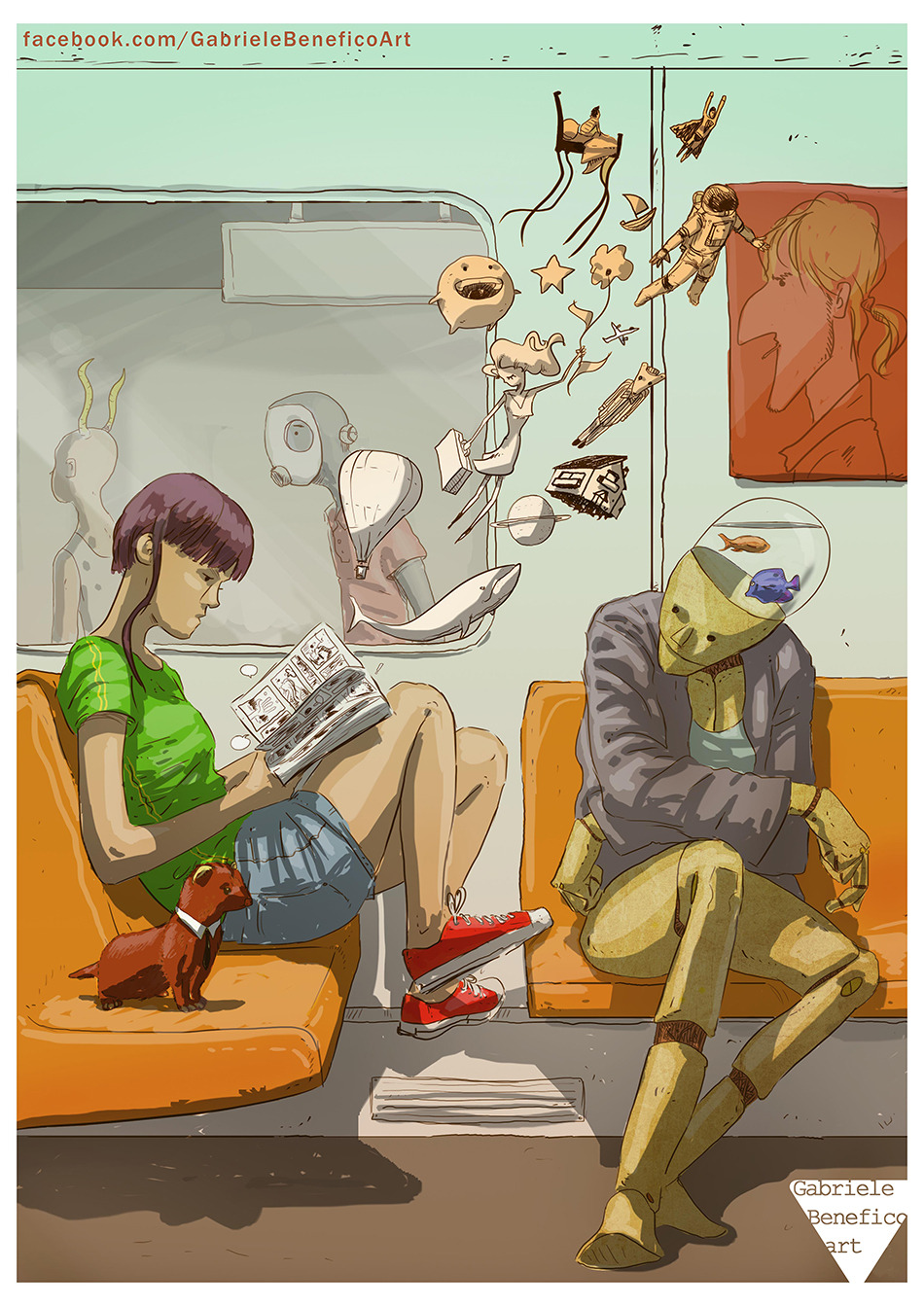
Not sure who the artist is. Followed links back to:
http://toto-ro.tumblr.com/post/35249277622
Category Archives: Art/Style
Melting Television
The Post-Productive Economy
A few paragraphs from an inspiring and thought-provoking post by the always-brilliant Kevin Kelly:
“These homes have no running water, no grid electricity, and no toilets. They don’t even have outhouses. But the farmers and their children who live in these homes all have cell phones, and they have accounts on the Chinese versions of Twitter and Facebook, and recharge via solar panels.”
“The farmers in rural China have chosen cell phones and twitter over toilets and running water. You can go to almost any African village to see this. And it is not because they are too poor to afford a toilet. As you can see from these farmers’ homes in Yunnan, they definitely could have at least built an outhouse if they found it valuable. But instead they found the intangible benefits of connection to be greater than the physical comforts of running water.”
“The 3rd Industrial Revolution is not really computers and the internet, it is the networking of everything. We have only begun to connect everything to everything and to make little network minds everywhere. It may take another 80 years for the full affect of this revolution to be revealed.”
Photography by Danielle Tunstall
Authors and publishers looking for an original cover for a book need look no furhter than this page by artist Danielle Tunstall. Each cover sold only once.
Billy Collins: Everyday moments caught in time
Messenger Bag
Burning Man at Night
Marshall McLuhan: You Know Nothing of My Work
I knew of Marshall McLuhan as the cultural icon of the 60s. Was familiar with a few of the more popular quotes. But like the subtitle says, I knew nothing of his work. And I probably wouldn’t have read this biography had it been written by anyone else. I’ve read several of Douglas Coupland’s novels and enjoy his style. Some insight into what we are experiencing now can be found in this slightly depressing story of a brilliant man, waaay ahead of his time. Continue reading
Life in the Meta City
I found the following in a brief Q&A with William Gibson (Scientific American):
“The Internet, which I think of as a sort of meta-city, has made it possible for people who don’t live in cities to master areas of expertise that previously required residence in a city, but I think it’s still a faith in concentrated choice that drives migration to cities.”
I paid $6 for the PDF of Gibson’s article (September issue). A few nuggets:
“Cities afforded more choices than small towns, and constantly, by increasing the number and randomization of potential human and cultural contacts. Cities were vast, multilayered engines of choice, peopled primarily with strangers.”
“Cities, to survive, must be capable of extended fugues of retrofitting.”
“Relative ruin, relative desertion, is a common stage of complex and necessary urban growth. Successful (which is to say, ongoing) cities are built up in a lacquering of countless layers: of lives, of choices encountered and made.”
If I wore a younger man’s clothes, I think a city would be the place for me.
“Why the impossible happens more often”
Kevin Kelly is one of the brilliant thinker/writers I look to for hope (along with Scott Adams, Clay Shirky, William Gibson and a few other). Following are from a post on why the impossible happens more often these days:
“Collectively we behave differently than individuals. Much more importantly, as individuals we behave differently in collectives. This has been true a long while. What’s new is the velocity at which we a headed into this higher territory of global connectivity. We are swept up in a tectonic shift toward large, fast, social organizations connecting us in novel ways. There may be a million different ways to connect a billion people, and each way will reveal something new about us. Something hidden previously.”
“Most of what “everybody knows” about us is based on the human individual. Collectively, connected humans will be capable of things we cannot imagine right now. These future phenomenon will rightly seem impossible.”
“My prediction is that in the coming years our biggest surprises — the ones that aren’t predicted — will be the result some new method of large scale social interactions. While we will get good at predicting the next advance of technological innovation, we won’t get very good at predicting what happens with the hive mind. And exploring the hive mind — the thousands of ways in which we can connect and reconnect ourselves — will be the chief activity of our civilization in the near term. If I am right then we’ll have to get better at believing in the impossible.”