Age of Social Media Ending

That’s the title of an article in The Atlantic back in 2022. It’s behind a paywall so I’ll share a few of my favorite excerpts (and a few thoughts). The piece is a year old so some of this might less (or more) relevant.

The reporter traces an evolution/devolution of “social networks” to “social media.”

Instead of facilitating the modest use of existing connections—largely for offline life (to organize a birthday party, say)—social software turned those connections into a latent broadcast channel. All at once, billions of people saw themselves as celebrities, pundits, and tastemakers.

Blogs (and bloglike services, such as Tumblr) [hosted] “musings” seen by few and engaged by fewer. In 2008, the Dutch media theorist Geert Lovink published a book about blogs and social networks whose title summarized their average reach: Zero Comments.

I was blogging long before social networks or media. And I read lots of blogs. I recall being…mystified?… by the idea of social media.

“social media,” a name so familiar that it has ceased to bear meaning. But two decades ago, that term didn’t exist. […] “…social networking became social media around 2009, between the introduction of the smartphone and the launch of Instagram. Instead of connection—forging latent ties to people and organizations we would mostly ignore—social media offered platforms through which people could publish content as widely as possible, well beyond their networks of immediate contacts. Social media turned you, me, and everyone into broadcasters (if aspirational ones).” […] The network, which had previously been used to establish and maintain relationships, becomes reinterpreted as a channel through which to broadcast.

As a one-time broadcaster (radio) I understand the appeal of reaching an audience.

Social media showed that everyone has the potential to reach a massive audience at low cost and high gain—and that potential gave many people the impression that they deserve such an audience.

I loved blogging. Still do. But damned few people ever read this blog. And I got even fewer comments. Disabled that feature years ago. “The rush of likes and shares felt so good because the age of zero comments felt so lonely.”
Homeless Americans

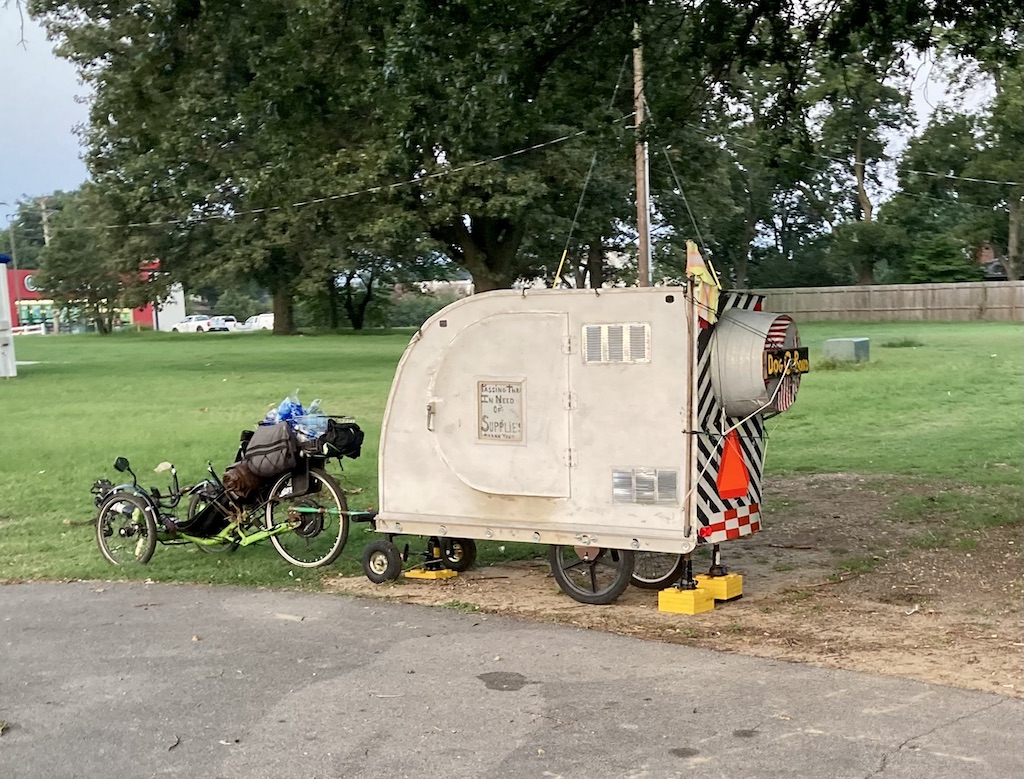
My friend John spotted this tiny home near the Walmart parking lot in Kennett, MO. Not sure if the owner qualifies as “homeless” but John is seeing more tents these days and tells of a homeless encampment nearby.


No shortage of stories on this problem but the most depressing thing about the following is it’s from 9 years ago.


Kennett is a small community in southern Missouri. A reminder that homeless is not just a problem in big cities like San Francisco and New York. The homeless are everywhere and they can’t be ignored (forever) and they are not going away.

Before we were monetized

From a WIRED post about smaller alternatives to the big social media sites;

“How will these smaller groups of happier people be monetized? This is a tough question for the billionaires. Happy people, the kind who eat sandwiches together, are boring. They don’t buy much. Their smartphones are six versions behind and have badly cracked screens. They fix bicycles, then they talk about fixing bicycles, then they show their friend, who just came over for no reason, how they fixed their bicycle, and their friend says, “Wow, good job,” and they make tea. That doesn’t seem like enough to build a town square on.”

Jobs

“We must do away with the absolutely specious notion that everybody has to earn a living. It is a fact today that one in ten thousand of us can make a technological breakthrough capable of supporting all the rest…. We keep inventing jobs because of this false idea that everybody has to be employed at some kind of drudgery because, according to Malthusian-Darwinian theory, he must justify his right to exist.”

–Buckminster Fuller, 1970

More on Jobs here…

Default Face

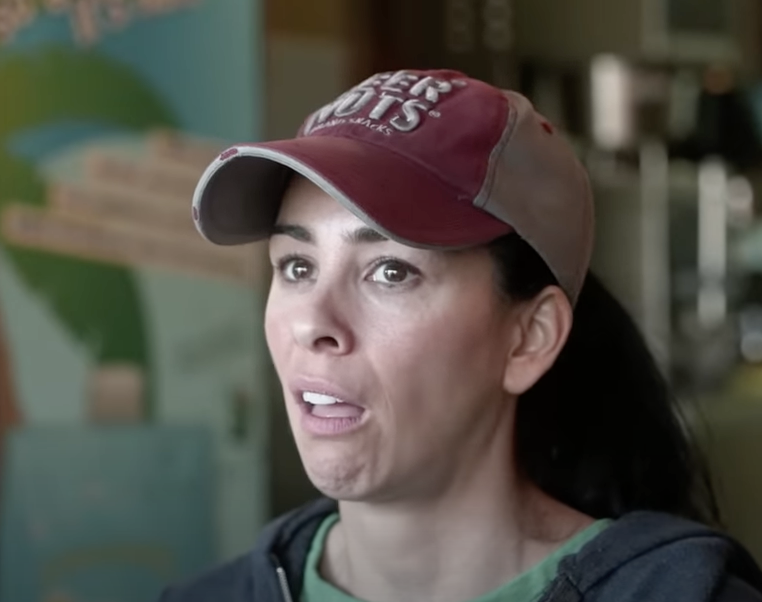
I recently watched an episode of Comedians In Cars Getting Coffee during which Sarah Silverman explains the concept of your “default face.” This is what your face looks like when it is without expression.

Ms. Silverman says you can “change your life” by simply changing your default face. I believe she is correct. I first noticed this about a month ago when I hung a small mirror from the windscreen in the Jeep (to watch the angry motorists forced to go slow behind me). I am also able to see my own face and I immediately saw my default face. Not pretty.

But when I smile… voila! I take five (ten?) years off my face. It will take a while for this to become my default face because it takes a) awareness and b) some extra facial muscles that don’t get used that often.