“Can a Burger Help Solve Climate Change?”

The September 30 issue of New Yorker Magazine includes the best article I’ve read on this topic. Staff writer Tad Friend spent six months reporting the piece which runs 12,000+ words (about 35 pages). I don’t know many with the attention span to read something of that length so here are a few excerpts I found interesting.

The piece focuses on Pat Brown, “a sixty-five-year-old emeritus professor of biochemistry at Stanford University and the founder and C.E.O. of Impossible Foods. By developing plant-based beef, chicken, pork, lamb, dairy, and fish, he intends to wipe out all animal agriculture and deep-sea fishing by 2035.”

  • Agriculture consumes more freshwater than any other human activity, and nearly a third of that water is devoted to raising livestock. One-third of the world’s arable land is used to grow feed for livestock, which are responsible for 14.5 per cent of global greenhouse-gas emissions.
  • Because methane is a powerful greenhouse gas, some twenty-five times more heat-trapping than carbon dioxide, cattle are responsible for two-thirds of the livestock sector’s G.H.G. emissions. Every four pounds of beef you eat contributes to as much global warming as flying from New York to London—and the average American eats that much each month.
  • the Impossible Burger requires eighty-seven per cent less water and ninety-six per cent less land than a cowburger, and its production generates eighty-nine per cent less G.H.G. emissions. They made it nutritionally equal to or superior to beef.
  • Ninety-five per cent of those who buy the Impossible Burger are meat-eaters.
  • The three largest meatpacking companies in America have combined annual revenues of more than two hundred billion dollars.
  • Researchers at the University of Minnesota found fecal matter in sixty-nine per cent of pork and ninety-two per cent of poultry; Consumer Reports found it in a hundred per cent of ground beef.
  • Cooked beef contains at least four thousand different molecules, of which about a hundred contribute to its aroma and flavor and two dozen contribute to its appearance and texture.
  • at least ninety-five per cent of American beef cattle spend their last four to six months being fattened on grain at feedlots.
  • American broilers, chickens raised for meat, are bred and confined in ways that make them more than four times larger than broilers were in the nineteen-sixties; as a result, they often collapse from their own weight.

Oak Mite

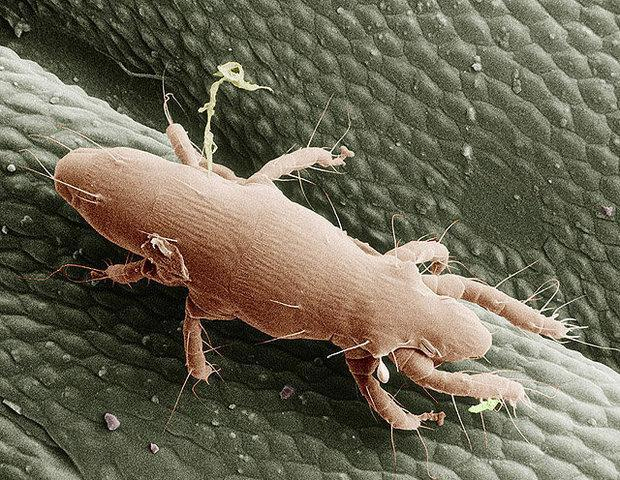
Insect bites are a real problem for me. A tick bite can plague me for a week or two. Chiggers are too horrible to even mention. I do my best to stay on the concrete but occasionally I forget and wander into the wilderness. A year ago, while walking on the prairie, I stumbled into a swarm/hive/nest of Oak Mites.

After feeding and reproducing, the mite then exits the leaf in the fall looking to find a protected location to overwinter. It is at this time millions of microscopic mites are blown in the wind, falling or landing on us. That is when they bite, resulting in the itchy rashes that are painful. Mites that don’t land on us spend the winter protected, waiting to emerge the following season to potentially start their reign of terror over.

I had never heard of Oak Mites until the Urgent Care physician identified the bites. There’s really not much you can do but treat the bites with anti-itch creams. And friends, there is no itch like an Oak Mite itch. Okay, maybe Poison Ivy or Poison Oak, but it’s close. And it takes at least three weeks to subside and feel remotely human again.

Three weeks ago — one year almost to the day — I managed to drive the Land Rover through some tall grass and again encounter Oak Mites. Even worse this time. The bites were so concentrated I had bites on top of bites. So thick you could not see the individual bites. Too horrible to share photos.

Because these fuckers are wind blown, there’s apparently no way to completely avoid them. But no more walking in tall grass for this boy.

Surgically Enhanced

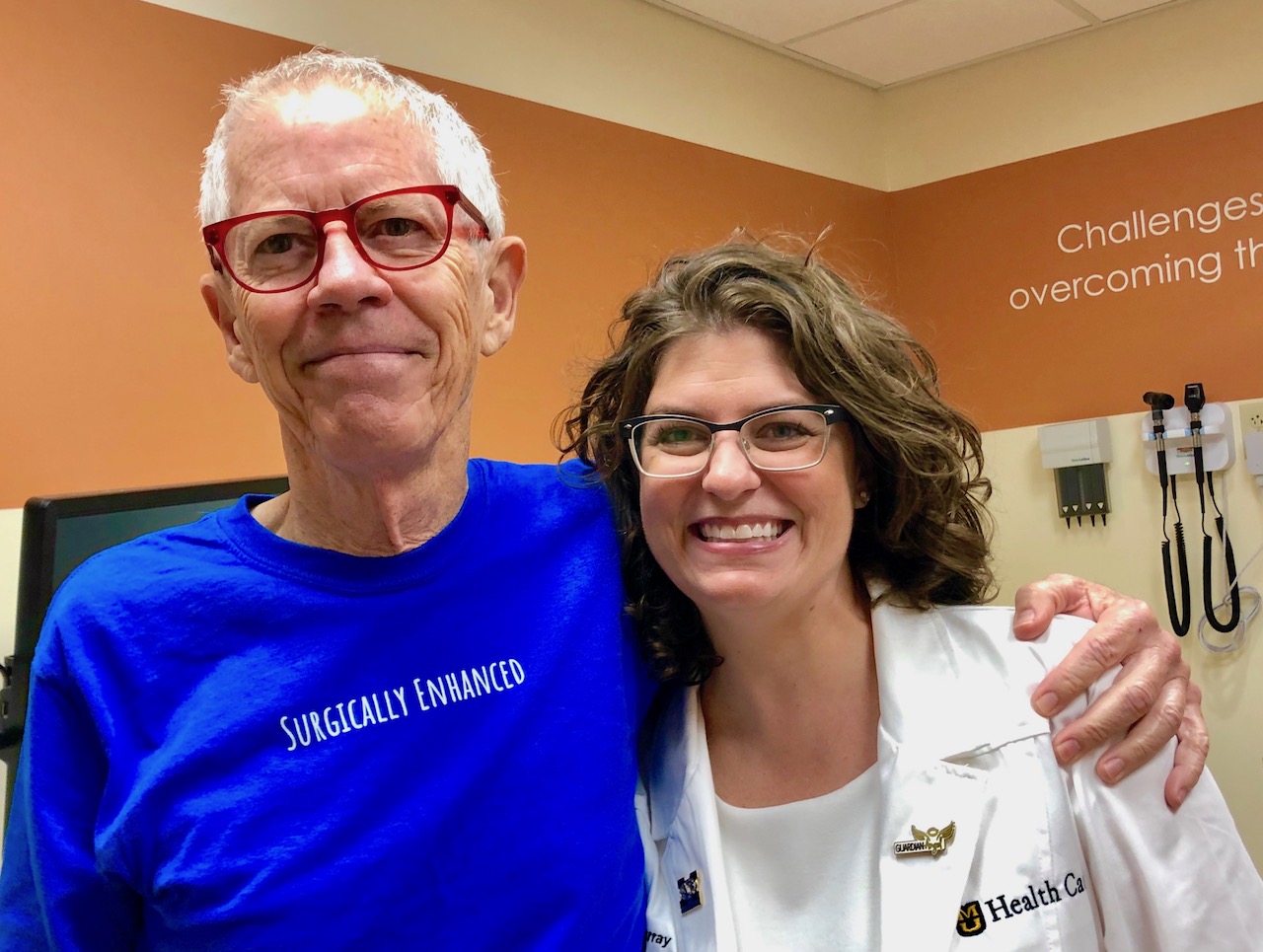
Had a little surgical procedure six weeks ago and met with my urologist, Dr. Katie Murray, today for follow-up. Since nobody wants to hear about old guy surgery, I’m telling folks I had a couple of inches added. Life has gotten a whole lot better. Beer on the deck tonight at sunset.

Impossible Slider


Have not had a White Castle “slider” in… 25 years? Remember them as greasy little things best consumed after a night of drinking.

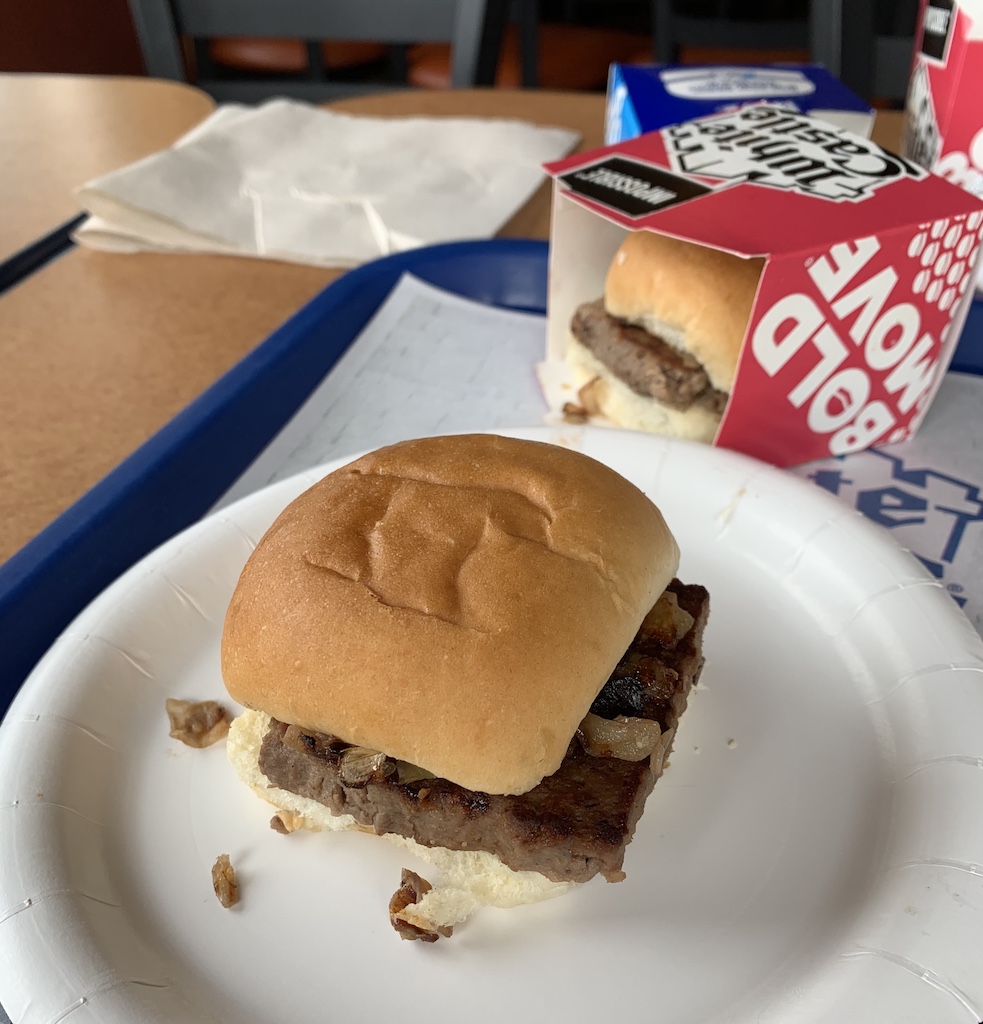
Stopped in today to try their Impossible (Foods) Slider. One of the few places in mid-Missouri the Impossible Foods burger is available. It was NOT greasy and I’m not sure I could tell difference from a beef patty (although I haven’t tasted one of those in 6 years). Lady behind me had her first as well and agreed it was very tasty.

Is red meat or white meat healthier?

According to the American Journal of Clinical Nutrition… neither.

White meat could carry the same heart health risks as red meat according to scientists who studied how beef and chicken affect cholesterol levels. The authors of a study published in the American Journal of Clinical Nutrition concluded plant-based proteins seem to be the best option for those looking to control their blood cholesterol levels.

Meatless

Stopped eating beef, pork and poultry six years ago today. No milk but I do eat eggs and fish. Hasn’t been all that hard really. I am looking forward to trying one of the new Impossible Burgers.

Impossible Whopper

“If I didn’t know what I was eating, I would have no idea it was not beef.”

Eric Bohl is Director of Public Affairs & Advocacy for Missouri Farm Bureau, the state’s largest farm organization. He drove to St. Louis to try his first Impossible Whopper at Burger King. He liked it.

“The two burgers did not taste identical, but the difference was small. The Impossible Whopper’s flavoring seemed a bit more external, as if it came more from something applied to the patty than from the patty itself. The traditional Whopper’s flavor seemed more intrinsic to the meat. That said, the difference was pretty minor. If I didn’t know what I was eating, I would have no idea it was not beef.”

“If farmers and ranchers think we can mock and dismiss these products as a passing fad, we’re kidding ourselves. This is not just another disgusting tofu burger that only a dedicated hippie could convince himself to eat. It’s 95 percent of the way there, and the recipe is likely to only get better. Farmers and ranchers need to take notice and get ready to compete. I’ve tasted it with my own mouth, and this fake meat is ready for prime time.”

Next month I will have been meat free for six years. No beef, pork or poultry. I’ve never been sure if fish is meat but I do eat fish. I haven’t been in a Burger King in years but I’m looking forward to trying the Impossible Whopper.


Update April 12, 2019 – The following is from an article by Mark R. O’Brian, Professor and Chair of Biochemistry, Jacobs School of Medicine and Biomedical Sciences, University at Buffalo, The State University of New York. A more technical explanation of some of the science behind the Impossible Burger.

“The Impossible Burger includes an ingredient from soybeans called leghemoglobin, which is a protein that is chemically bound to a non-protein molecule called heme that gives leghemoglobin its blood-red color. In fact, a heme — an iron-containing molecule — is what gives blood and red meat their color. Leghemoglobin is evolutionarily related to animal myoglobin found in muscle and hemoglobin in blood, and serves to regulate oxygen supply to cells.”

“I recruited a scientific colleague in St. Louis to try out the Impossible Whopper, and he could not distinguish it from its meaty counterpart. Although he was quick to qualify this by noting all of the other stuff on the Whopper may mask any differences.”

All my health data on iPhone app

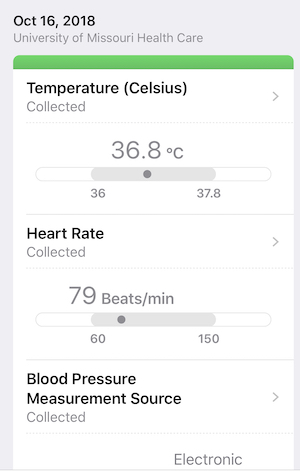
I’ve never paid much attention (or used) the Health app on my iPhone. Apple says it “consolidates health data from iPhone, Apple Watch, and third-party apps” to do all kinds of stuff. It has a “Health Records” section that I never did anything with until a couple of days ago when I learned I could sync my records (University of Missouri Health Care) to the Apple Health app.

I have about ten years of records stored in the MU Health system and can get to them via browser or iPhone app. But it took a little digging and I rarely had the need.

Within minutes all of my data was pulled into the phone app and I mean everything. More than 600 records (I’ve been pretty healthy). Immunizations, lab results, medications… the works. And much easier to navigate than the website and app I’d been using. So now I have all of my health records right there on my phone. Additional info.

Hacking the genome

“He Jiankui, a genome-editing researcher from the Southern University of Science and Technology of China in Shenzhen, says that he implanted into a woman an embryo that had been edited to disable the genetic pathway that allows a cell to be infected with HIV.” (Nature)

Claim hasn’t been verified but this is exactly what Yuval Noah Harari talks about in Homo Deus (and 21Lessons). The rest of the world might freak out over the ethics of this kind of research but when on country has this tech, they won’t be able to stop it. Do you think some billionaire will care about ethics if she can protect her offspring from some dreaded disease. And how long before someone hacks the genome to make a human smarter/stronger/faster/whatever?